For anyone drawn to the lyrical power of classical Chinese verse, poets of the Tang dynasty stand as its most luminous pillars, weaving stories of heaven, earth, and human longing into lines that still resonate across centuries of cultural upheaval and quiet joy. Their work is not just literature—it is a living archive of a golden age, where poetry was the language of connection, identity, and truth.
For readers of Chinese poetry, these poets are the foundation of understanding classical verse, offering insights that bridge ancient traditions and modern hearts.
What Poets Of The Tang Dynasty Means in Chinese Poetry
In the context of Chinese poetry, “poets of the Tang dynasty” refers to the cohort of writers active between 618 CE (the founding of the Tang dynasty) and 907 CE (its collapse), whose work defined the peak of classical Chinese poetic achievement. Unlike earlier periods where poetry was often limited to court elites, Tang poetry was a universal art form: it was taught to scholars, celebrated at banquets, and even composed by commoners who mastered the craft.
The term also encompasses the diverse styles that emerged across the dynasty’s four eras—Early, High, Middle, and Late Tang—each reflecting the political, social, and cultural shifts of the time. It is not just a group of writers, but a movement that transformed Chinese poetry into a core part of national identity.
Historical and Cultural Background
The Tang dynasty was a period of unprecedented prosperity and cultural exchange, making it the perfect soil for poetic flourishing. Chang’an (modern-day Xi’an), the Tang capital, was the world’s largest city, a hub of the Silk Road that brought Buddhism, Persian art, and foreign music to Chinese shores.
This cross-cultural pollination enriched poetic imagery: poets began referencing foreign landscapes, musical instruments, and spiritual ideas that had been rare before.
Poetry’s central role in Tang society was cemented by the imperial civil service exam (keju), Poets Of The Tang Dynasty which required candidates to compose regulated verses (lushi) as part of their assessments. This meant that educated men—from wealthy nobles to poor scholars—spent years honing their poetic skills, turning verse into a path to official power and social status.
Even women, though largely excluded from formal education, wrote poetry in private, leaving behind works that challenge traditional narratives of Tang society. The dynasty’s long lifespan (nearly 300 years) allowed poets to evolve their craft: Early Tang poets laid the groundwork for formal poetic structures, High Tang poets reached creative heights, Middle Tang poets turned to social commentary, and Late Tang poets expressed melancholy as the dynasty declined.
Key Poems, Poets, or Examples
The most iconic poets of the Tang dynasty are household names in China, and their works are taught to children as part of basic literacy. Let’s explore three of the most celebrated, alongside their defining poems:
Li Bai (701–762): The Poet Immortal
Li Bai, known as the “Poet Immortal,” was a free-spirited wanderer who rejected official life to roam the mountains and rivers of China. Poets Of The Tang Dynasty His poetry is marked by bold imagery, emotional intensity, and a rejection of formal constraints.
His most famous work is *Quiet Night Thought* (Jing Ye Si), a short quatrain that captures universal homesickness:
> Before my bed, a pool of moonlight— > I suspect it’s frost on the ground.
> I lift my head to look at the mountain moon, > then bow my head to think of home.
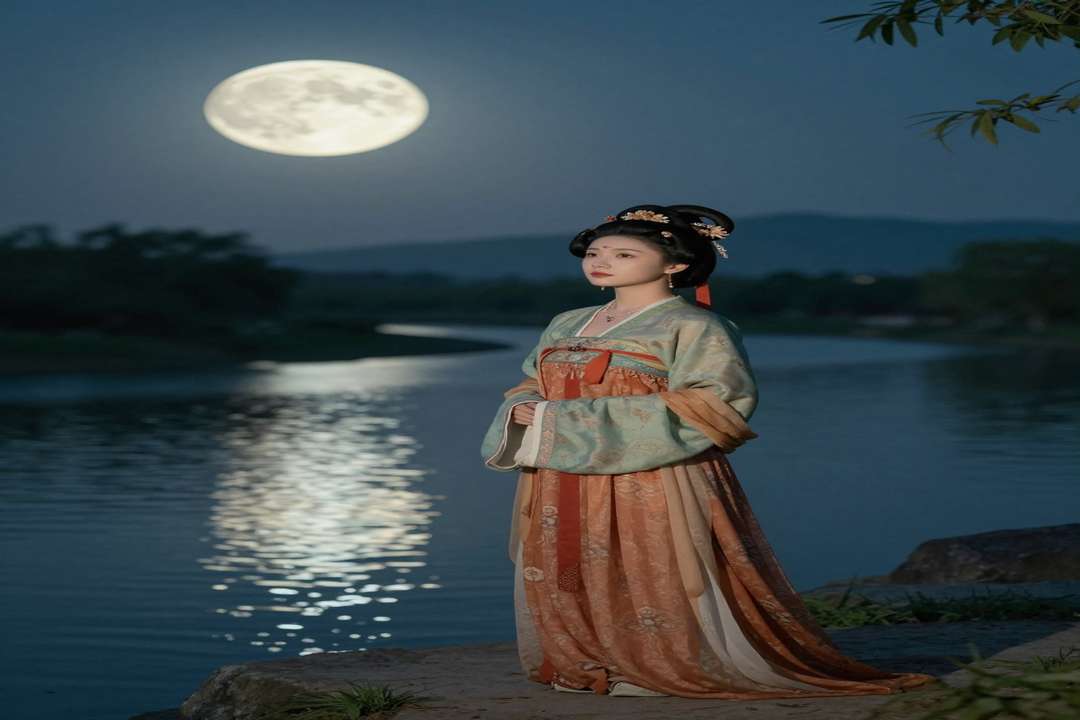
Written during a period of wandering away from his family, the poem’s simplicity is its strength. It has been memorized by generations of Chinese children, as it distills the quiet ache of missing loved ones into four lines that need no complex explanation.
Its relevance lies in its universality—anyone who has been far from home can relate to the moment of seeing the moon and longing for what is lost.
Du Fu (712–770): The Poet Sage
Du Fu, called the “Poet Sage,” was a grounded, empathetic writer whose work centered on the suffering of ordinary people during the An Lushan Rebellion (755–763), a devastating civil war that shattered Tang prosperity. Poets Of The Tang Dynasty His poem *Spring View* (Chun Wang) is a raw portrait of a city in ruins:
> The capital is broken, mountains and rivers remain; > cities in spring, Poets Of The Tang Dynasty grass and trees run wild.
> I feel grief at the time, flowers bring tears; > I hate parting, Poets Of The Tang Dynasty birds startle my heart.
> Beacon fires have lasted three months; > a letter from home is worth ten thousand gold.
> I scratch my white hair, it grows thinner; > can’t even hold a hairpin.
Written in 757, when Chang’an had fallen to rebel forces, the poem contrasts the persistence of nature with human tragedy. The line “a letter from home is worth ten thousand gold” has become a proverb, capturing the desperation of separation during crisis.
Du Fu’s work is unique for its blend of personal sorrow and historical witness, making it a critical document of Tang’s decline and a testament to human compassion.
Wang Wei (701–761): The Poet Buddha
Wang Wei, a devout Chan Buddhist (Chinese Zen), was a master of nature poetry that blends quiet contemplation with vivid imagery. Poets Of The Tang Dynasty After leaving political life, he retreated to the Lantian mountains, where he wrote poems that explore emptiness and presence.
His *Deer Park* (Lu Zhai) is a perfect example:
> In the empty mountains, no one sees a person— > yet I hear voices, Poets Of The Tang Dynasty echoing in the dark.
> The sunlight enters the deep forest, > shines again on the green moss.
The poem’s focus on silence and subtle light reflects Chan Buddhist ideas about seeing the divine in the ordinary. Wang Wei’s work invites readers to slow down and notice the small, beautiful details of nature—a reminder that even in quiet spaces, there is meaning.
How to Read and Understand It
For anyone new to Tang poetry, Poets Of The Tang Dynasty the key is to approach it with patience and curiosity, rather than rigid rules. Here are practical tips for learners, whether you’re a student, teacher, or casual reader:
- Start short, go simple: Begin with quatrains (jueju), which are just four lines long—like Li Bai’s *Quiet Night Thought*. These are easy to memorize and capture the core of Tang poetry’s power.
- Learn the poet’s context: A poem’s meaning often depends on the writer’s life. Li Bai’s wanderlust explains his love of the moon, Poets Of The Tang Dynasty while Du Fu’s experience of war shapes his focus on suffering.
- Notice imagery, not just words: Tang poets use natural elements (moon, mountains, flowers) as symbols, not just descriptions. The moon often stands for home or longing, while pine trees represent resilience.
- Read aloud: Classical Chinese poetry has a rhythmic cadence that is lost in silent reading. Saying lines out loud helps you feel their music and emotion.
- Use annotated resources: For deeper understanding, look for translations with notes on historical events or cultural references. Books like *The Poetry of the Tang* (edited by Stephen Owen) are excellent, and ChinesePoetryHub.com offers free, learner-friendly explanations.
For teachers, Poets Of The Tang Dynasty Tang poetry is a gateway to Chinese history: use Du Fu’s *Spring View* to teach about the An Lushan Rebellion, or Li Bai’s poems to discuss Tang-era trade and travel. For students, joining a local poetry recitation group or practicing writing your own jueju (even in translation) can deepen your connection.
Why It Still Matters Today
Poets of the Tang dynasty are not just historical figures—their work remains vital in modern times. In China, Tang poetry is a core part of school curricula, with students required to memorize dozens of poems to build cultural literacy.
Beyond China, it is a global literary treasure: Li Bai is featured in anthologies of world poetry, and Du Fu is celebrated as the “poet of humanity” for his ability to connect with suffering across cultures.
The themes of Tang poetry are timeless: homesickness, Poets Of The Tang Dynasty love, grief, and the beauty of nature. Wang Wei’s *Deer Park* speaks to our modern desire for quiet in a noisy world, while *Quiet Night Thought* captures the universal ache of missing family.
Tang poetry also offers a window into a society that valued introspection and community—lessons that feel urgent in our fast-paced, digital age.
What is the meaning of poets of the tang dynasty?
Poets of the Tang Dynasty refer to the literary artists who composed poetry during the Tang Dynasty (618-907 CE), widely considered the golden age of Chinese poetry. These poets produced some of the most celebrated works in Chinese literary history, characterized by their elegance, depth of emotion, and technical mastery.
Who wrote poets of the tang dynasty and what is the historical context?
The Tang Dynasty produced numerous renowned poets including Li Bai, Du Fu, Wang Wei, Bai Juyi, and Li Shangyin. This period emerged after the reunification of China following the Sui Dynasty, during a time of political stability, economic prosperity, and cultural openness that encouraged artistic expression and literary development.
What literary devices are used in poets of the tang dynasty?
Tang Dynasty poets employed various literary devices including imagery, symbolism, allusion, parallelism, and personification. They used vivid natural imagery to convey emotions, referenced classical texts and historical events, and mastered the regulated verse form (shi) with its strict tonal patterns and rhyme schemes.
What is the cultural significance of poets of the tang dynasty?
The cultural significance of Tang Dynasty poets is immense, as their works became the standard of Chinese poetic excellence and influenced literature for over a millennium. Their poems document historical events, express philosophical insights, celebrate nature, and explore human emotions, forming the foundation of Chinese literary education and aesthetic appreciation.
How should poets of the tang dynasty be interpreted?
Tang Dynasty poetry should be interpreted by considering the historical context, the poet's personal circumstances, and the cultural values of the time. Readers should pay attention to the interplay between form and content, understand the symbolic meanings of natural elements, and appreciate how these poems reflect both universal human experiences and distinctly Chinese perspectives on life, nature, and society.