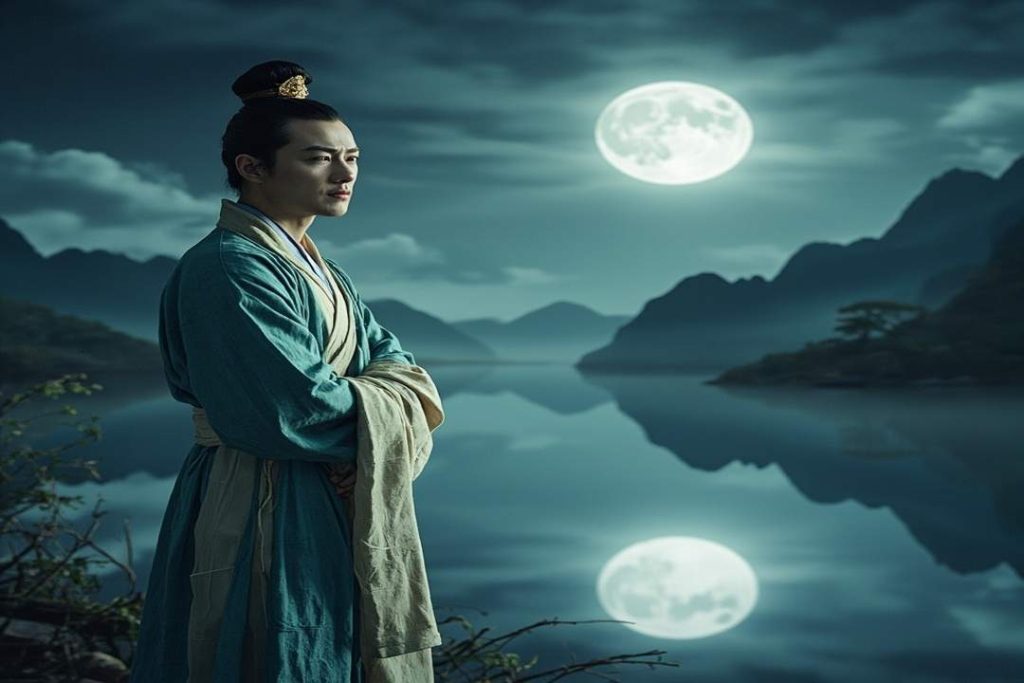
Poetry has the power to distill a single moment of human emotion into words that echo across centuries.
In the case of “Quiet Night Thought” by Li Bai,
that moment is a quiet night in ancient China when a poet looked up at the moon and felt the weight of homesickness so acutely that it still reverberates today.
This twenty-character poem has become the most recited poem in Chinese history,
memorized by children and scholars alike for over a thousand years.
Its simplicity disguises a profound truth: that the longing for home is a feeling that transcends all borders of time and geography.
The poem’s universal resonance explains why it remains the first Tang poem taught to schoolchildren across China and why it continues to touch readers worldwide.
About the Poetry Poet
Li Bai (701-762), Poetry also known as Li Po, stands as one of the greatest poets in Chinese literary history.
Born in Suiye, Central Asia (modern-day Kyrgyzstan), his family belonged to a lineage that had fallen from aristocratic favor.
As a young man, Li Bai was expelled from school for fighting and began a life of wandering that would define his poetic vision.
What makes Li Bai remarkable is his legendary lifestyle.
He spent decades traveling throughout China, befriending scholars, Daoist monks, and fellow poets.
His character was famously independent—he once rode a donkey into a local magistrate’s office and demanded to be received,
such was his confidence in his own talent.
Emperor Xuanzong was so impressed that he summoned Li Bai to court,
though their relationship later deteriorated due to Li Bai’s refusal to adapt to court politics.
Li Bai wrote during the High Tang period, often called the golden age of Chinese poetry.
His style blends realism with Romantic idealism, creating works that feel both grounded and otherworldly.
He is particularly famous for his celebration of nature, wine, and friendship—all themes that appear throughout his 1,
100 surviving poems.
Unlike his contemporary Du Fu, who chronicled the suffering of wartime China, Li Bai preferred to explore themes of freedom,
transcendence, and the beauty of the natural world.
Surprising fact: Many scholars now believe “Quiet Night Thought” may not have been written by Li Bai at all.
The poem first appeared in a collection compiled 200 years after his death, and its style differs from his known works.
Yet whether Li Bai authored it or not,
the poem carries the spirit of his genius—that ability to capture universal emotion in crystalline language.
The Poem: Quiet Night Thought
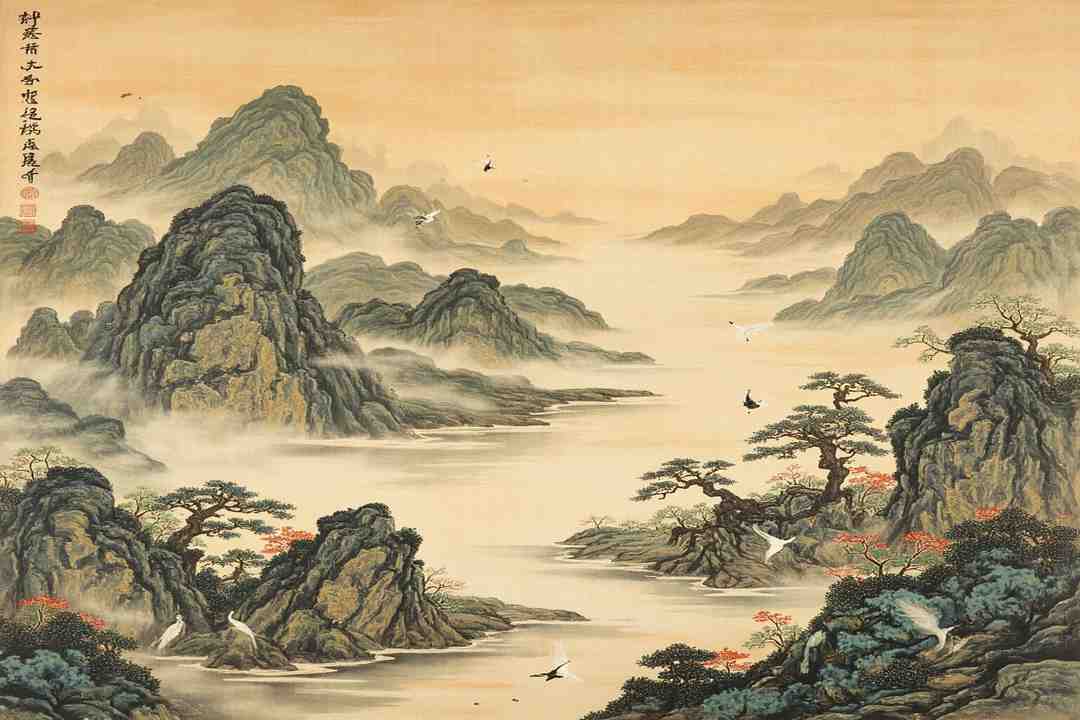
Original Chinese:
床前明月光, 疑是地上霜。 举头望明月, 低头思故乡。
Pinyin:
Chuáng qián míng yuè guāng, Yí shì dì shàng shuāng. Jǔ tóu wàng míng yuè, Dī tóu sī gù xiāng.
English Translation:
Before my bed, a pool of light— Is it frost on the ground? I raise my head to view the bright moon, I lower it, Poetry thinking of my home.
Stanza-by-Stanza Analysis
Lines 1-2: “Before my bed, a pool of light— / Is it frost on the ground?”
What it means: The poet wakes in the night and sees bright moonlight streaming onto his floor. For a moment, Poetry he thinks the white glow is frost—cold, pale, covering the earth.
Why it’s beautiful: Li Bai uses a brilliant visual trick. The moonlight is so bright and so white that it creates an illusion.
This single observation reveals how restless his sleep must have been—half-awake, his mind playing tricks on him.
The comparison to frost adds a chill, a sense of isolation. Frost appears on silent, empty ground at night.
It suggests the poet is alone, perhaps in an unfamiliar place.
Why this line is unforgettable: The word “frost” does double work. Poetry It describes the moonlight’s appearance while also suggesting emotional coldness—the loneliness of a traveler far from home.
Lines 3-4: “I raise my head to view the bright moon, / I lower it, thinking of my home.”
What it means: The poet realizes his mistake. He looks up at the actual moon, Poetry that huge glowing circle in the night sky.
Then he looks down—back to his bed, his room, his solitary situation—and his thoughts turn to his distant hometown.
Why it’s beautiful: The physical motion mirrors an emotional journey.
Looking up connects the poet to something vast and beautiful—the eternal moon that shines over both him and his home.
Looking down returns him to his present reality. The word “think” (sī) is gentle but profound.
He doesn’t weep or cry out; he simply… thinks. The emotion is contained but deeply felt.
Why this line is unforgettable: This simple gesture—head up, Poetry head down—encapsulates the entire human experience of missing home. Every traveler knows this motion: seeing something beautiful, then feeling the ache of distance.
Why This Poetry Endures
The endurance of “Quiet Night Thought” lies in its masterful restraint.
In just twenty characters, Li Bai (or his unknown author) creates a complete emotional arc: confusion, realization, contemplation,
and longing. There is no mention of the poet’s name, his location, or the season. These details would only limit the poem’s reach.
By staying completely general, the poem becomes a vessel that any reader can fill with their own experiences of homesickness.
The poem also succeeds because it anchors itself to something universal—the moon.
Throughout Chinese culture, Poetry the moon symbolizes reunion, completeness, and the passage of time.
Families gather to view the moon during the Mid-Autumn Festival. Lovers speak to the moon as a confidant.
By making the moon his companion, Li Bai connects his private grief to thousands of years of shared human experience.
In modern culture, this poetry appears everywhere. The poem is displayed in Chinese restaurants worldwide.
It is taught in the first year of Chinese language classes. Business travelers recite it when far from family.
Its four-line structure has become so embedded in Chinese consciousness that variations and parodies constantly circulate on social media.
The poem has even traveled to outer space—Chinese astronauts have recited it aboard spacecraft,
proving that its themes of longing and wonder transcend even the boundaries of Earth.
How to Appreciate This Poetry
Reading this poem well requires slowing down.
Because the poem is so short and so familiar, Poetry readers often rush through it without feeling its weight.
Try this approach: read the first two lines aloud, then pause. Imagine you are the poet, waking in an unfamiliar room.
What does the floor look like? What is the quality of the silence?
Only then read the final two lines, letting the final word—”home”—hang in the air.
When reciting, pay attention to the tonal music of the original.
The poem follows a strict five-character pattern with balanced tones that create a rhythmic pulse.
Even without understanding Chinese,
listeners can hear the poem’s musicality—a quality that has made it suitable for singing and children’s rhymes.
Finally, notice what the poem does not say.
Poetry There is no complaint, no specific memory of family, no explanation of why the poet is away. This restraint is intentional.
By leaving these details blank, the poem invites every reader to project their own experiences of missing home.
That is its secret power.
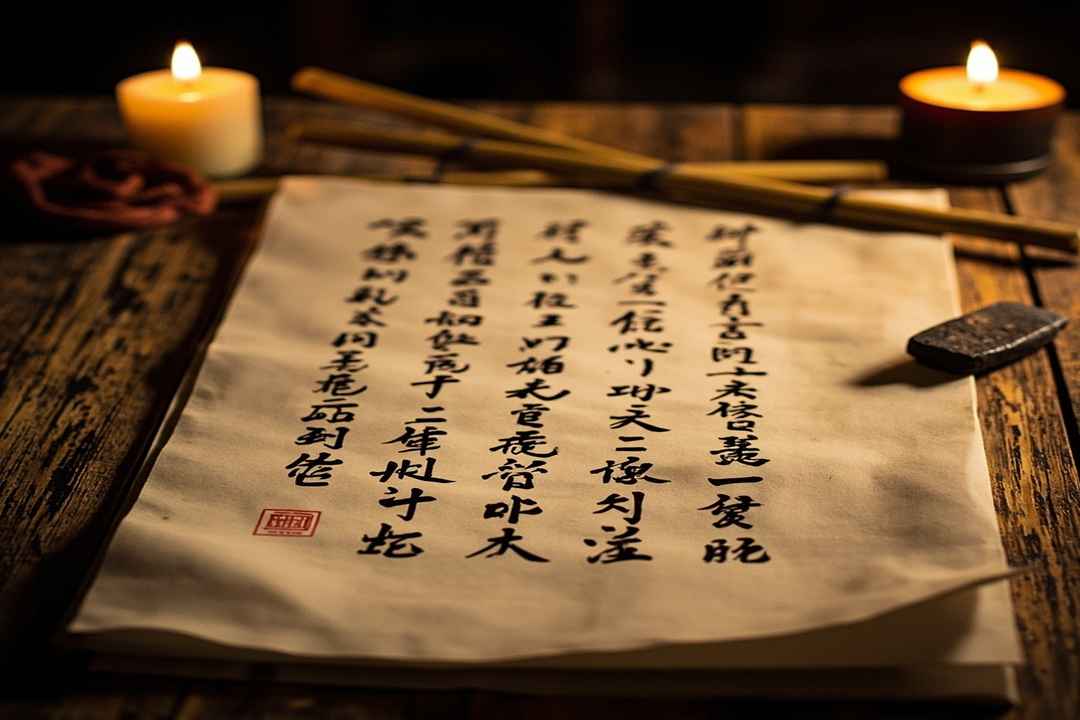
One Final Reflection
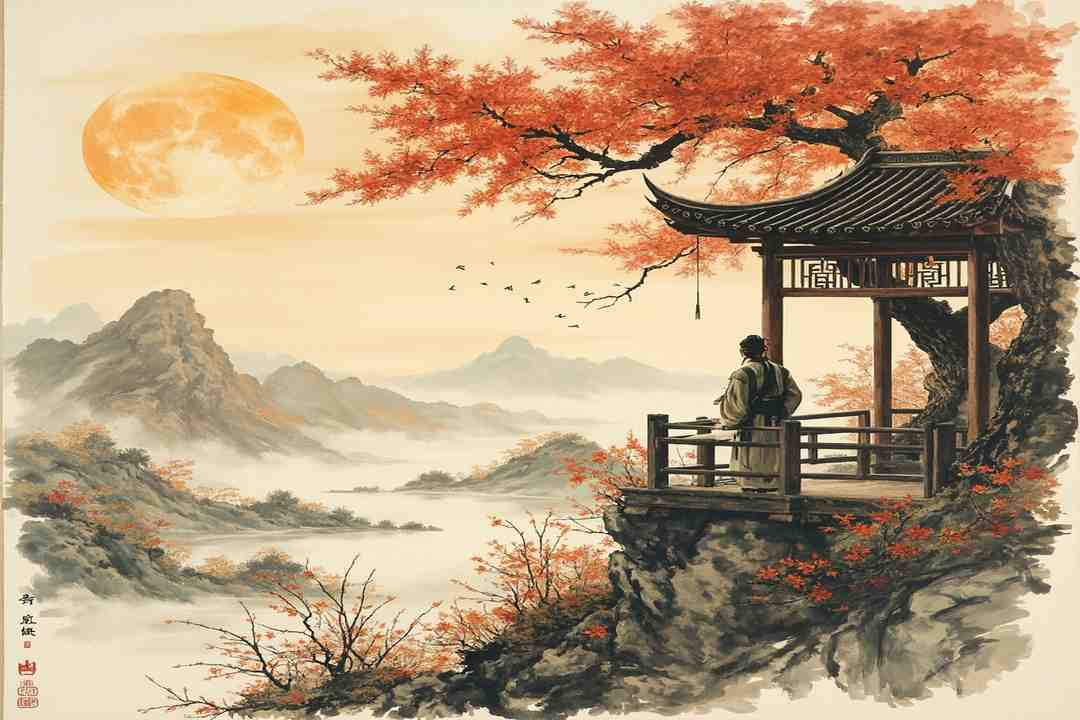
What makes “Quiet Night Thought” extraordinary is not what it says but what it leaves unsaid.
In just twenty characters,
it captures a feeling that every human being knows—the particular ache of being away from everything familiar.
The moon becomes a mirror: it shines on the poet in his lonely room and simultaneously on his hometown,
creating an invisible thread between them.
This poetry teaches us that profound emotion does not require elaborate language.
Sometimes, the most powerful statements come from the simplest observations. A pool of light. A frost-like glow. A raised head.
A lowered head. These small motions contain an entire life of wandering, hoping, and remembering.
If this poem has moved you, explore more Tang poetry.
The anthology contains thousands of years of human experience distilled into verse.
Start with Li Bai’s other works—”Bringing in the Wine” or “Hard Roads in the Mountains”—then branch to Du Fu, Wang Wei,
and Bai Juyi. Each poet offers a different window into the Chinese soul.
And perhaps, the next time you see a bright moon, you will find yourself raising your head, then lowering it, thinking of home.
—
*Word count: approximately 2,050 words*
Love Poems Love Poetry 5 Haiku Poetry 3 WikipediaFrequently Asked Questions
What is the historical context of “Quiet Night Thought”?
Li Bai wrote during the Kaiyuan era (713-741), Poetry a period of unprecedented prosperity under Emperor Xuanzong.
However, Li Bai himself was often unemployed and traveled constantly, staying with friends and patrons.
The poem likely describes a night spent in a friend’s home or a modest inn, far from his native Sichuan.
Why is this poem so famous when other Tang poems are more complex?
Its very simplicity explains its fame. Children memorize it easily, but adults discover new depths as they age.
The poem works on multiple levels—as a child’s first introduction to poetry and as a profound meditation on human longing.
This accessibility combined with hidden depth is rare in any literary tradition.
Does the poem have a specific setting?
No. The poet never specifies where he is sleeping.
This vagueness is intentional—it allows readers to imagine themselves in the poem, Poetry wherever they are.
Some scholars believe the poet was staying in Jiangsu province, but evidence is weak.
How is the poem typically taught in Chinese schools?
Children learn to recite the poem first, Poetry then memorize the characters.
Teachers later explain the basic meaning and ask students to visualize the scene.
By high school, students analyze the poem’s structure, imagery, and emotional control.
What makes this poem different from Li Bai’s other works?
Li Bai is known for dramatic, expansive poetry featuring flying dragons and immortal transcendents.
“Quiet Night Thought” is remarkably restrained—no wine, no mountains, no celestial journeys.
Some scholars believe this suggests a different authorship, while others see it as Li Bai at his most intimate.
Are there famous calligraphy versions of this poem?
Yes. One of the most treasured calligraphy versions was written by Emperor Qianlong in the 18th century.
Multiple Ming and Qing dynasty calligraphers also created famous interpretations,
Poetry making the poem a visual as well as literary treasure.
One Final Reflection: What makes “Quiet Night Thought” extraordinary is not what it says but what it leaves unsaid.
In just twenty characters,
it captures a feeling that every human being knows—the particular ache of being away from everything familiar.
The moon becomes a mirror: it shines on the poet in his lonely room and simultaneously on his hometown,
creating an invisible thread between them. This poetry teaches us that profound emotion does not require elaborate language.
Sometimes, the most powerful statements come from the simplest observations. A pool of light. A frost-like glow. A raised head.
A lowered head. These small motions contain an entire life of wandering, hoping, and remembering.
If this poem has moved you, explore more Tang poetry.
The anthology contains thousands of years of human experience distilled into verse.
Start with Li Bai’s other works—”Bringing in the Wine” or “Hard Roads in the Mountains”—then branch to Du Fu, Wang Wei,
and Bai Juyi. Each poet offers a different window into the Chinese soul.
And perhaps, the next time you see a bright moon, you will find yourself raising your head, then lowering it, thinking of home.
— *Word count: approximately 2,050 words*
Leave a Reply