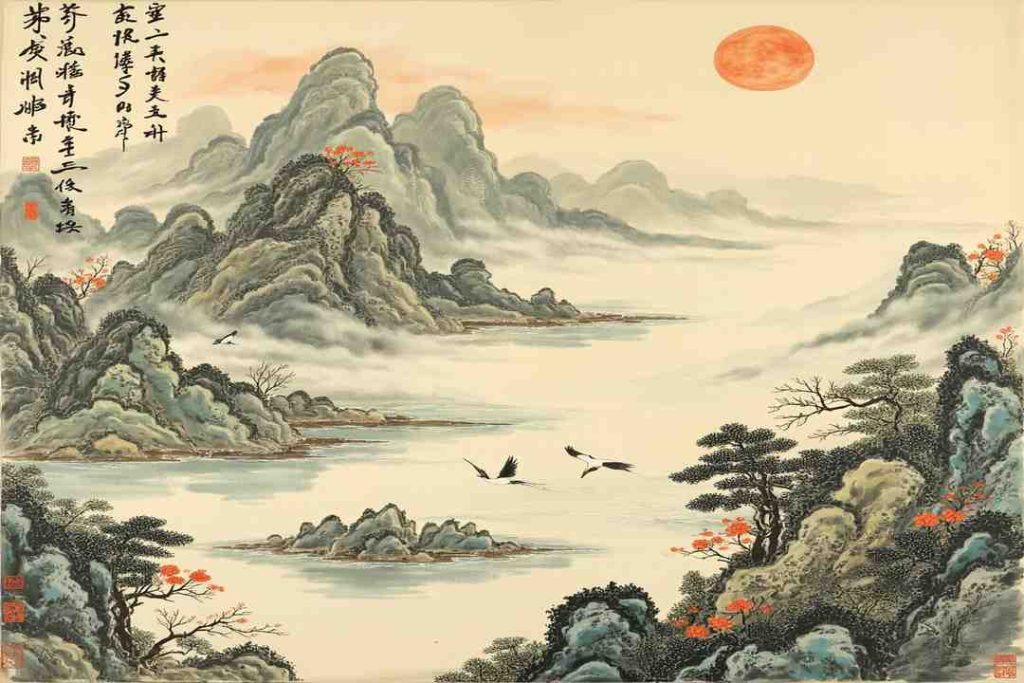
When we think of timeless literary works that bridge centuries and cultures, chinese poems—especially those from the Tang Dynasty—stand as a luminous testament to human emotion, beauty, and insight. For readers around the world, these verses are not just words on a page; they are windows into the soul of ancient China, offering glimpses of joy, sorrow, wonder, and longing that resonate as deeply today as they did over 1,200 years ago.
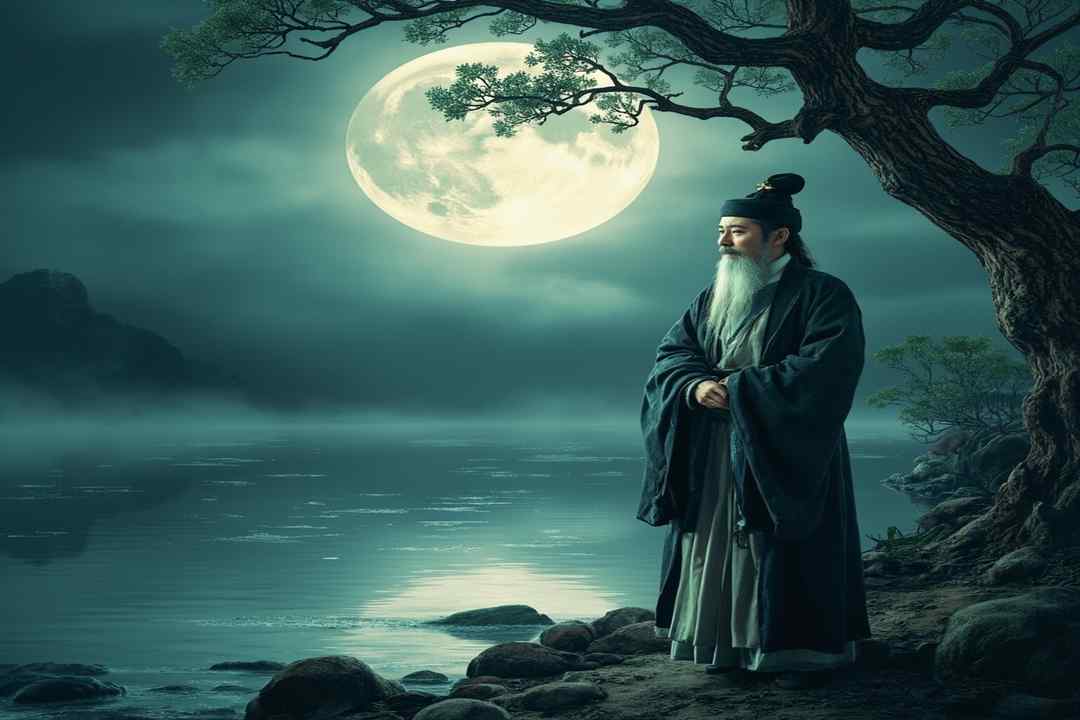
What Chinese Poems Means in Chinese Poetry
Many beginners approaching chinese poems often hold a narrow view: that they are short, rigidly structured lines with little room for personal expression. This misunderstanding stems from focusing only on form, rather than the deeper core of what these verses represent.
In classical Chinese tradition, poetry is not a mere exercise in rhyme or meter; it is a medium for conveying the ineffable—thoughts that cannot be spoken plainly, emotions that linger like mist over a mountain lake. Chinese poems, at their best, distill a lifetime of experience, a moment of revelation, or a quiet longing into a handful of carefully chosen characters.
The structure of Tang poetry—whether the four-line jueju or the eight-line lüshi—acts as a framework, not a cage. For example, a jueju requires strict tonal patterns and a rhyme scheme, but within these constraints, poets craft works that feel spontaneous and intimate.
This balance of discipline and freedom is one of the defining features of great chinese poems: every word is placed with purpose, yet the result feels natural, like a conversation with an old friend. A key insight for new readers is that imagery in chinese poems is never decorative—it is symbolic.
The moon, for instance, rarely refers only to the celestial body; it is a companion to the lonely traveler, a witness to a lover’s separation, or a reminder of home. When a poet writes of “frost on the ground” under the moon, they are not describing weather—they are capturing the quiet ache of homesickness, a feeling that transcends time and culture.
This use of layered imagery is what makes chinese poems so universal, even to those who do not speak a word of Chinese.
Moving beyond form and imagery, chinese poems teach us to value subtlety over grandeur. Where Western poetry might use long, dramatic lines to express emotion, Tang poets often use understatement: a sigh, a glance, a single flower.
This restraint does not mean weakness; it means precision—every detail carries weight, and the reader is invited to fill in the gaps with their own experiences. In this way, chinese poems become a collaborative art form, where the poet’s words spark the reader’s memories and feelings.
Historical and Cultural Background
The Tang Dynasty (618–907 CE) is universally regarded as the golden age of chinese poems, a period when literary creativity flourished alongside political stability and cultural expansion. For nearly three centuries, Tang China was the most powerful nation in the world, with a capital (Chang’an, present-day Xi’an) that drew scholars, artists, and travelers from across Asia.
This prosperity created a fertile environment for poetry: it was not just a pastime for the elite, but a part of daily life—written at banquets, exchanged between friends, and even required for success in the imperial civil service exams.
Poetry in the Tang Dynasty was a way to assert identity and connect with others. A scholar might write a poem to a colleague to thank them for a meal, or to a friend leaving for a distant post to bid farewell.
Even ordinary people—farmers, merchants, soldiers—composed verses to express their joys and sorrows, though the most celebrated works came from the greatest poets of the era. The Tang also saw a diversity of poetic styles: from the wild, romantic verses of Li Bai to the somber, realistic works of Du Fu, and the quiet, meditative landscapes of Wang Wei.
The social and political upheaval of the late Tang also shaped its poetry. The An Lushan Rebellion (755–763 CE), Chinese Poems a catastrophic civil war that weakened the empire, inspired some of the most powerful works of the period.
Poets like Du Fu wrote of the suffering of ordinary people, the loss of family, and the grief of a nation in crisis. These works are not just historical records; they are human stories that speak to the universal experience of loss and resilience.
The Tang’s poetry also reflected the dynasty’s openness to foreign influences: frontier poems captured the lives of soldiers stationed at the empire’s edges, while Buddhist and Taoist ideas seeped into verses about nature and spirituality.
This cultural context is essential to understanding Tang poetry. When a poet writes of a “lonely sail on the Yangtze River,” they are not just describing a scene—they are referencing the vast, interconnected world of the Tang, where rivers were highways, and travel was a common part of life.
The imperial exams, which required candidates to write poetry, meant that poetry was a skill everyone strived to master, ensuring that great works were created and preserved for future generations.
Key Poems, Poets, or Examples
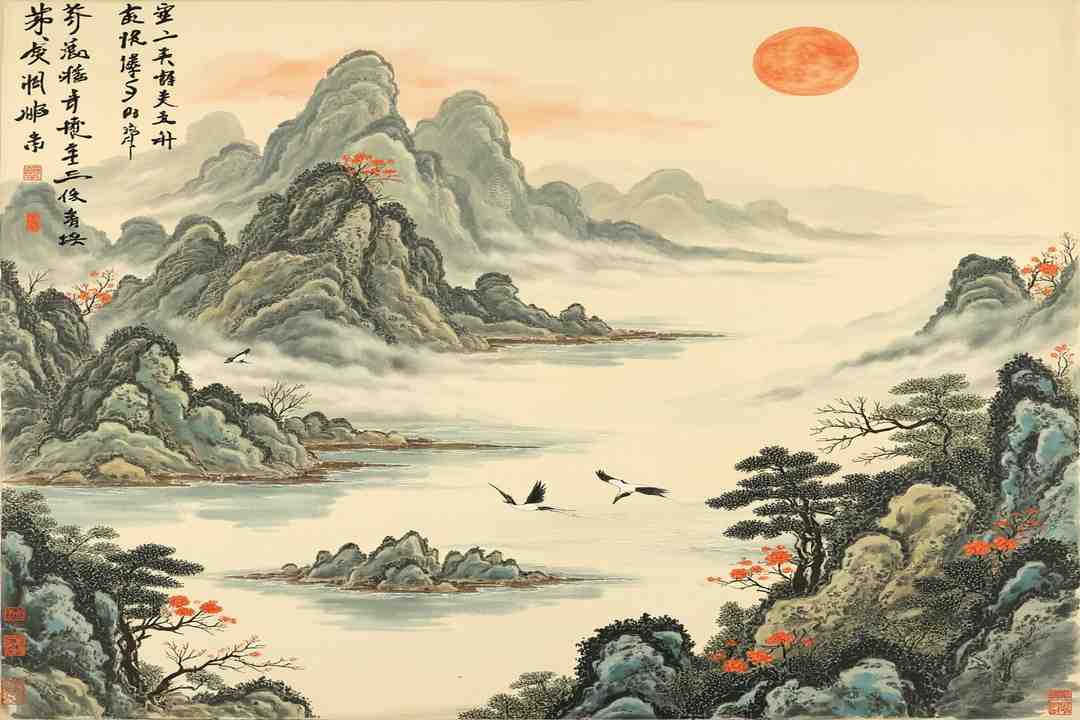
To understand the power of chinese poems, there is no better way than to explore the works of the Tang Dynasty’s greatest poets, each of whom offers a unique window into the era’s soul. Let’s look at four iconic works, each with its own story and meaning.
The first is Li Bai’s (701–762 CE) “Quiet Night Thought” (Jing Ye Si), written in the 720s when the poet was traveling far from home. Li Bai, known as the “Immortal Poet” for his free-spirited, almost otherworldly verses, wrote this jueju to capture the quiet ache of homesickness.
The poem reads: “Before my bed lies a pool of moonlight, / I suspect it’s frost on the ground. / I lift my head to look at the mountain moon, / I lower my head to think of my hometown.” The meaning is simple but profound: it is not a grand declaration of longing, but a small, intimate moment—waking up in a strange place, seeing the moon, and feeling the pull of home.
This poem is one of the most famous in Chinese literature, taught to children across the country, and it remains a gateway for Western readers to understand the emotional core of Tang poetry. Next is Du Fu’s (712–770 CE) “Spring View” (Chun Wang), Chinese Poems written in 757 during the An Lushan Rebellion, when Chang’an had fallen to rebel forces.
Du Fu, often called the “Sage Poet” for his empathy and realism, wrote this poem to express his grief over the destruction of his city and his longing for his family. The lines: “The capital is broken, mountains and rivers remain; / Cities in spring, grass and trees grow dense.
/ I feel sad at the time, flowers shed tears; / I hate parting, birds startle my heart. / War has lasted for three months, a letter from home is worth ten thousand gold.
/ I scratch my head and become thinner, my hair can’t hold the hairpin.” This work is a powerful reminder of how Tang poetry reflects historical trauma, turning personal sorrow into a universal lament for a nation in crisis. For readers, it offers insight into the human cost of war, a theme that remains relevant today.
Third is Wang Wei’s (701–761 CE) “Deer Enclosure” (Lu Zhai), a jueju that exemplifies the landscape poetry of the mid-Tang. Wang Wei was not just a poet—he was also a master painter, and his verses are known for their visual precision and meditative tone.
The poem: “Empty mountains have no people, but you hear voices. / The sun’s rays enter the deep forest, shining back on the green moss.” The meaning is one of quiet solitude and harmony with nature: even in a vast, empty mountain, there is life, and light can find its way to the smallest details.
This poem teaches readers to slow down and notice the beauty in stillness, a key part of appreciating chinese poems. It also shows how Tang poetry blends art forms—painting and poetry—to create works that are both visual and emotional.
Fourth is Li Bai’s “Viewing Mount Lu Waterfall” (Wang Lu Shan Pu Bu), Chinese Poems written in 725 during his travels in southern China. This work is a celebration of natural grandeur, capturing the awe of seeing a waterfall cascade down a mountain.
The lines: “The sun shines on Incense Burner, smoke rises in purple. / The waterfall hangs in front of the river, nine thousand feet down.
/ Feixia stream wants to fall from the sky, I thought it was the Milky Way falling for nine days.” Li Bai uses bold imagery and exaggeration to convey the sublime power of nature—turning a waterfall into a stream from the heavens. This poem shows the romantic side of Tang poetry, where the poet’s imagination is as wild as the landscapes they describe, and it reminds readers of the joy of wonder.
How to Read and Understand It
Reading chinese poems, especially Tang poetry, requires a different approach than reading Western poetry. The key is to slow down and pay attention to the details, rather than rushing for a “big meaning.” For beginners, start with short jueju like the four examples above—their brevity makes them easy to grasp, but their depth rewards repeated readings.
Read each word carefully, thinking about its symbolic meaning: is the moon a sign of home? Is the mountain a symbol of solitude?
Another tip is to consider the poet’s context when reading. When Li Bai wrote “Quiet Night Thought,” he was a wanderer, Chinese Poems far from his family and home.
When Du Fu wrote “Spring View,” his country was in ruins, and he was separated from his wife and children. Understanding these circumstances helps you connect with the emotion behind the words.
Even if you don’t speak Chinese, translations that capture the tone of the original are more valuable than literal ones—look for versions that keep the understated beauty of the original, rather than adding flowery language that does not exist in the Chinese. Rhythm is also important in Tang poetry.
The tonal patterns—high and low, long and short syllables—create a musical quality that is lost in translation if not preserved. Reading the poem aloud, even in translation, can help you feel this rhythm, making the emotion more tangible.
For example, the short lines of “Quiet Night Thought” mirror the quiet, pensive mood of the speaker, while the longer lines in “Spring View” convey the weight of Du Fu’s grief.
Finally, don’t be afraid to let the poem mean what it means to you. Chinese poems are open to interpretation, and a single line can evoke different feelings in different readers.
The goal is not to find a “correct” meaning, but to connect with the emotion and experience that the poet is sharing. This flexibility is part of what makes chinese poems so enduring—they speak to each reader in their own way, across time and culture.
Why It Still Matters Today
In a world that often values speed and grandeur, the quiet wisdom of Tang poetry feels more relevant than ever. These verses teach us to slow down, notice the small moments, and find beauty in simplicity.
When we read “Quiet Night Thought,” we recognize the ache of being far from home, a feeling that anyone who has traveled or lived abroad understands. When we read “Spring View,” we feel the pain of loss and the hope of reunion, emotions that are universal in times of crisis.
For cross-cultural appreciation, Chinese Poems Tang poetry is a bridge between East and West. It offers a way to understand Chinese culture without the complexity of learning the entire language—through the poems, we learn about the importance of family, the love of nature, and the value of community.
For overseas Chinese communities, these poems are a link to their roots, a way to pass down cultural traditions to the next generation. For English learners, they provide insight into how language can convey deep emotion in few words, improving their understanding of both English and Chinese.
Tang poetry also reminds us that great art transcends borders. A poem written by a Chinese poet 1,200 years ago can move a reader in New York, London, or Tokyo in the same way it moved a Tang scholar in Chang’an.
This shared human experience is what makes literature powerful, and chinese poems are among the best examples of this. At ChinesePoetryHub.com, our mission is to share this beauty with readers around the world, making Tang poetry accessible and engaging for everyone, regardless of their background.
Even in the digital age, Chinese Poems when we consume content in short bursts, the depth of Tang poetry remains. Each poem is a small world, full of stories and emotions that invite repeated exploration.
Whether you are a student learning about Chinese culture, a poetry lover looking for new works, or someone just curious about the world, Tang poetry has something to offer—waiting to be discovered, one line at a time.
Frequently Asked Questions
What is the meaning of Chinese poems from the Tang Dynasty?
Tang Dynasty Chinese poems express the profound emotional and philosophical dimensions of human experience through carefully crafted language. They often convey themes of nature’s beauty, longing, nostalgia, friendship, political commentary, and spiritual enlightenment. These poems serve as vehicles for expressing the interplay between the individual and the universe, capturing moments of clarity, melancholy, and transcendence that resonate across centuries.
Who wrote Chinese poems and what is the historical context?
Tang Dynasty poetry was written by numerous renowned poets including Li Bai, Du Fu, Wang Wei, Li Shangyin, Du Mu, Bai Juyi, and Meng Haoran, among thousands of others. The historical context was the Tang Dynasty (618-907 CE), a period of unprecedented political stability, economic prosperity, and cultural openness in Chinese history. This golden age saw the expansion of the imperial examination system, flourishing trade along the Silk Road, and the synthesis of influences from across Asia, creating an environment where literary arts could thrive.
What literary devices are used in Chinese poems?
Tang Dynasty poems employ numerous literary devices including vivid imagery drawn from nature, symbolic representation (such as the moon representing longing or cranes symbolizing longevity), parallel structure (对仗), enjambment for emotional continuity, allusion to historical events and earlier classical texts, and strategic use of compression to convey deep meaning in few characters. Poets also utilized tonal patterns and the deliberate arrangement of characters to create musical rhythm, as well as juxtaposition of contrasting images to evoke complex emotional responses.
What is the cultural significance of Chinese poems?
Tang Dynasty poems hold immense cultural significance as cornerstones of Chinese literary and artistic heritage. They became models of poetic excellence that influenced subsequent Chinese literature for over a millennium and shaped East Asian literary traditions in Japan, Korea, and Vietnam. These poems
Poetry Of The Tang Dynasty: Major Poets, Poems and Legacy Tang Poets: Major Poets, Poems and Legacy How To Write Haiku: 6 Hidden Meanings You Missed at First Read Wikipedia