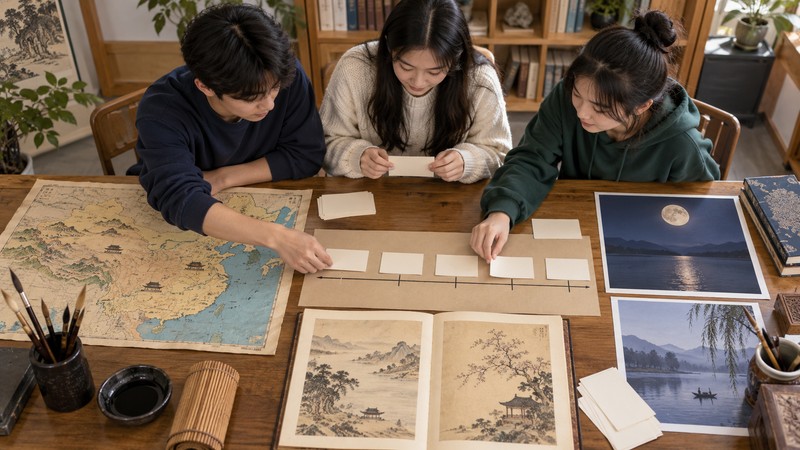
Tang poetry for students is more than a set of ancient verses to memorize—it’s a window into 300 years of Chinese history, emotion, and artistic craft that still resonates today. For beginners, it offers accessible entry points to classical Chinese culture, with concise forms and universal themes like love, loss, and longing.
Quick Answer
Tang poetry for students works best when learners move from sound and literal meaning to imagery, speaker, context, and evidence-based interpretation.
Basic Facts
- Teaching object: Tang poetry reading for students
- Best use: Classroom lessons, self-study, and guided close reading
- Main check: Sound, image, plain meaning, context, and textual evidence
- Common mistake: Reducing the poem to one moral sentence
Quick reference: tang poetry for students = read aloud + literal meaning + imagery + context + evidence.
Unlike complex Western epics, Tang poems often distill deep feelings into just a few lines, making them approachable for learners of all ages and backgrounds. Many students first encounter Tang poetry in school curricula (both in China and globally) because it balances cultural significance with emotional clarity.
What Tang Poetry For Students Means in Chinese Poetry
Tang poetry for students refers specifically to the subset of classical Chinese verses from the Tang Dynasty (618–907 CE) that are taught, studied, and adapted for new learners. A common misunderstanding among beginners is that Tang poetry is a rigid, outdated form disconnected from modern life, but this couldn’t be further from the truth.
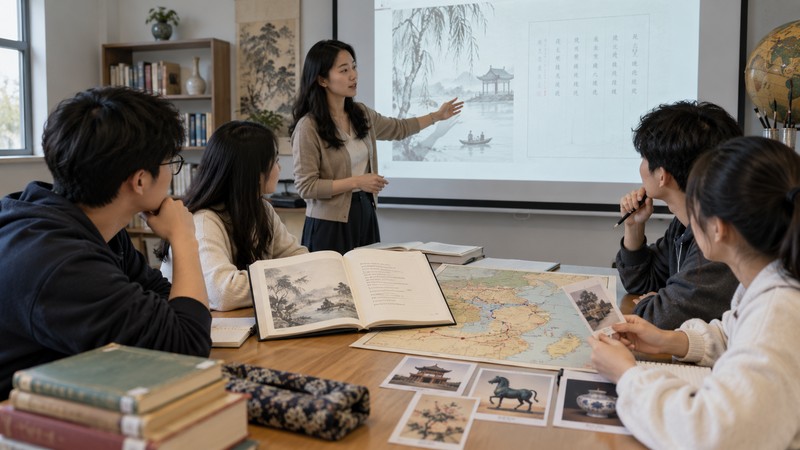
For Chinese students growing up overseas, it’s a bridge to their heritage—poems like Li Bai’s “Quiet Night Thought” are often among the first pieces of Chinese literature they learn, linking them to family and cultural roots. For international students, it’s a way to understand Chinese values, from respect for nature to the importance of community.
Unlike later forms of Chinese poetry, Tang poetry emphasizes balance between structure and emotion. The two main forms, jueju (four-line short poems) and lüshi (eight-line regulated poems), have strict rules for rhyme, tone, and line length, but these constraints actually help students focus on precision and imagery.
For example, a jueju might use 5 or 7 characters per line, forcing the poet to choose every word carefully. This structure teaches beginners to value brevity and intentionality in writing, a skill that translates to all forms of communication.
Another key aspect is its accessibility: many Tang poems are written in everyday language, Tang Poetry For Students not the archaic prose of earlier dynasties. This makes it easier for students to connect with the text on a personal level, rather than getting lost in obscure vocabulary.
Teachers often highlight how Tang poets used simple words to convey complex feelings—like comparing moonlight to frost in “Quiet Night Thought”—a technique that’s still taught in creative writing classes today.
Historical and Cultural Background
To understand Tang poetry for students, it’s essential to ground it in the Tang Dynasty’s unique historical context. The Tang was a golden age of Chinese civilization, marked by territorial expansion, economic prosperity, and cultural exchange.
The capital, Chang’an (modern Xi’an), was a global metropolis with over a million residents, including traders, monks, and scholars from across Asia. This diversity influenced poets, who drew on foreign themes and styles, blending them with traditional Chinese literary techniques.
The imperial examination system, Tang Poetry For Students which allowed scholars to enter government service, also played a critical role in shaping Tang poetry. Poets often wrote verses to demonstrate their talent to examiners or patrons, so poetry became a core part of social and professional life.
Many famous poets, like Du Fu, spent years taking these exams, their work reflecting the pressures and hopes of this system. For students, this context turns poems into stories of real people navigating life’s challenges—like Du Fu’s grief over failing an exam or Li Bai’s frustration with political exclusion.
Major historical events also left a deep mark on Tang poetry. The An Lushan Rebellion (755–763 CE), a devastating civil war that weakened the dynasty, inspired some of the most powerful Tang works.
Du Fu, who lived through this period, wrote “Spring View” while hiding in Chang’an, capturing the destruction of the city and the longing for peace. For students, this means Tang poems aren’t just beautiful words—they’re historical documents that record the joys and sorrows of an entire era.
Even poets like Wang Wei, who lived through political upheaval, used nature imagery to express resilience, showing how poetry was a tool for survival and reflection.
Key Poems, Poets, or Examples
To make Tang poetry for students tangible, it’s helpful to focus on four iconic works by well-known poets, each offering a unique lesson.
First, Li Bai (701–762 CE), the “Poet Immortal,” wrote “Quiet Night Thought” (Jing Ye Si) in the 720s. This 5-character jueju is one of the most famous poems in Chinese literature.
The original text is: “Before my bed, there’s moonlight. I thought it was frost on the ground.
I look up at the mountain moon, then bow my head and think of home.” Written when Li Bai was traveling far from his Sichuan hometown, the poem’s simplicity makes its theme—homesickness—universal. For students, it teaches that the most profound emotions often come from small, everyday moments.
Modern translations by Arthur Waley capture this intimacy, making it easy for English-speaking learners to connect.
Second, Du Fu (712–770 CE), the “Poet Sage,” wrote “Spring View” (Chun Wang) in 757, during the An Lushan Rebellion. Tang Poetry For Students The poem’s opening lines are: “Mountains and rivers remain, but the city walls are in ruins.
Grass and trees grow deep in the capital.” Du Fu, then captured by rebel forces, uses this imagery to express his grief over the destruction of Chang’an. For students, this poem shows how poetry can document historical trauma, making it a powerful tool for understanding the past.
It also teaches the value of contrast—between the enduring landscape and the broken city.
Third, Wang Wei (701–761 CE), a master of landscape poetry, wrote “The Deer Enclosure” (Lu Zhai) in the 750s. The jueju reads: “Empty mountain, no one to be seen.
Yet voices echo, clear and deep. Sunlight filters through the woods, shining back on the green moss.” Wang Wei, who lived in seclusion after political conflicts, uses quiet observation to convey tranquility.
For students, this poem introduces the “shan shui” (mountains and rivers) genre, teaching them to notice small details in nature and express calmness. It’s also a lesson in how poetry can reflect a poet’s inner state.
Fourth, Bai Juyi (772–846 CE), known for his accessible style, wrote “Song of the Parting at the Ancient Road” (excerpt) in the early 9th century. Tang Poetry For Students The poem tells the story of a traveler saying goodbye to a friend, with lines like: “The ancient road stretches endlessly, the wind blows the willows.
The sun sets behind the mountains, and the traveler’s heart is heavy.” Bai Juyi’s use of everyday language makes this poem relatable to students, as it captures the pain of saying goodbye. It also shows how Tang poetry can tell a narrative, not just express emotion.
How to Read and Understand It
Reading Tang poetry for students requires a few simple strategies to unlock its beauty. First, start with short forms like jueju (four lines) instead of long lüshi (eight lines).
The brevity of jueju means you can focus on every word, making it easier to grasp the theme. For example, “Quiet Night Thought” is only 20 characters, so you can memorize it in minutes and revisit it often.
Second, read aloud to feel the rhythm. Tang Poetry For Students Tang poems have strict tonal patterns that create a musical flow, which translates to English when spoken.
When you read “The Deer Enclosure” aloud, the gentle, slow pace matches the quiet mountain scene. This helps you connect with the poem’s mood, even if you don’t understand every word.
Teachers often recommend reading aloud in class, as it makes the experience more interactive.
Third, focus on imagery before translation. Many students get stuck on literal translations, but Tang poems use vivid imagery to convey meaning.
Instead of translating every character, ask: What does the moonlight look like? How does the sound of an echo make you feel?
For example, in “Spring View,” the “grass and trees growing deep” symbolize the emptiness of the city, not just vegetation. This approach helps you understand the poem’s emotion without getting bogged down in language.
Fourth, use reliable translations. Tang Poetry For Students Arthur Waley’s translations are known for their accuracy and accessibility, while Burton Watson’s works are more scholarly.
Avoid overly free translations that change the original meaning. For students, pairing the original Chinese (with pinyin) with a good translation is ideal, as it helps you learn basic characters while understanding the poem.
Expert advice from teachers is also valuable—many can explain cultural context that textbooks miss, like why willows are associated with farewell in Chinese poetry.
Why It Still Matters Today
Tang poetry for students remains relevant because it connects to universal human experiences. In a world where many students feel disconnected from their heritage or want to understand other cultures, Tang poetry offers a direct link to Chinese history and emotion.

During the COVID-19 pandemic, for example, many students turned to “Quiet Night Thought” to cope with being separated from family, showing that its theme of homesickness is timeless.
For overseas Chinese students, Tang Poetry For Students Tang poetry is a way to maintain cultural identity. Learning poems like “Quiet Night Thought” allows them to share their heritage with friends and family, and feel connected to their roots even if they grow up in a different country.
It’s also a way to learn Chinese—many students start with these poems to practice basic characters and pronunciation, building a foundation for further language study.
Globally, Tang poetry is part of world literary heritage. It’s taught in universities and high schools around the world, as it teaches concise writing, emotional expression, and cultural empathy.
Students who study Tang poetry learn to appreciate different ways of seeing the world, from Wang Wei’s focus on nature to Du Fu’s focus on social justice. This cross-cultural understanding is more important than ever in today’s interconnected world.
Frequently Asked Questions
What is the meaning of tang poetry for students?
Tang poetry for students refers to the classical poems written during the Tang Dynasty (618-907 CE) that are commonly studied in educational settings. These poems cover various themes including nature, love, friendship, nostalgia, and philosophical reflections. They serve as gateway texts for learning classical Chinese language, literature, and cultural values.
Who wrote tang poetry for students and what is the historical context?
Tang poetry was written by numerous celebrated poets including Li Bai, Du Fu, Wang Wei, Bai Juyi, and Li Shangyin. The Tang Dynasty was a golden age of Chinese poetry, characterized by political stability, economic prosperity, and cultural flourishing. Poetry became essential for civil service examinations, and students traditionally studied these works to prepare for official positions.
What literary devices are used in tang poetry for students?
Tang poetry employs numerous literary devices including imagery, symbolism, parallelism, alliteration, and allusion. Poets use vivid natural imagery to convey emotions, employ parallel structure for balance and rhythm, and reference historical events or classical works. Metaphor and personification are also common, along with strict tonal patterns and regulated verse forms.
What is the cultural significance of tang poetry for students?
Tang poetry holds immense cultural significance as it represents the pinnacle of Chinese literary achievement. For students, these poems provide insight into Tang Dynasty society, values, and worldview. They continue to influence modern Chinese language and literature, and studying them helps students connect with over a thousand years of literary tradition and develop appreciation for classical Chinese aesthetics.
How should tang poetry for students be interpreted?
Tang poetry should be interpreted by considering the poet’s background, historical context, and emotional intent. Students should examine the literal meaning of characters while exploring deeper symbolic meanings. Understanding the regulated verse structure, tonal patterns, and allusions enhances interpretation. Reading aloud helps appreciate the musical quality, and considering the poet’s life circumstances provides emotional context for themes like impermanence, nostalgia, and harmony with nature.
Poem Interpretation Example: 7 Hidden Meanings You Missed at Poems From The Tang Dynasty: Tang Poetry Guide Poets Of The Tang Dynasty: Major Poets, Poems and Legacy Wikipedia