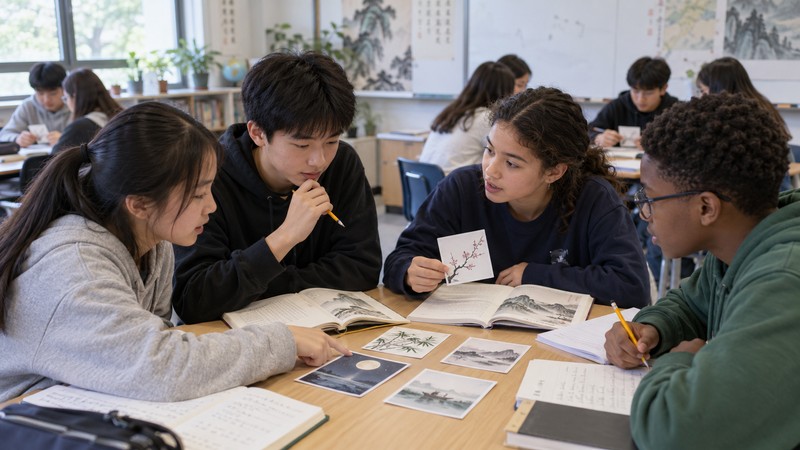
For anyone diving into Tang Dynasty poetry, chinese poetry worksheets are more than just study tools—they are bridges connecting ancient poetic traditions to modern learners. Unlike generic fill-in-the-blank drills, these worksheets are rooted in centuries-old Chinese pedagogy, designed to immerse readers in the rhythm, imagery, and cultural context of classical verse.
Quick Answer
Chinese poetry worksheets work best when they move students from literal meaning to imagery, speaker, historical background, and short evidence-based interpretation.
Basic Facts
- Teaching object: Chinese poetry worksheets
- Best use: Classroom close reading, homework, and guided self-study
- Main check: Poem text, vocabulary, imagery, context, and evidence question
- Common mistake: Turning a worksheet into memorized facts without interpretation
Quick reference: chinese poetry worksheets = poem text + vocabulary + imagery + context + evidence task.
This article explores their purpose, history, and value for mastering Tang poetry, with concrete examples and practical guidance.
What Chinese Poetry Worksheets Means in Chinese Poetry
To understand chinese poetry worksheets, one must first look beyond Western-style educational templates. In classical Chinese learning, memorization and active engagement with text were central—practices that evolved into the worksheets we use today.
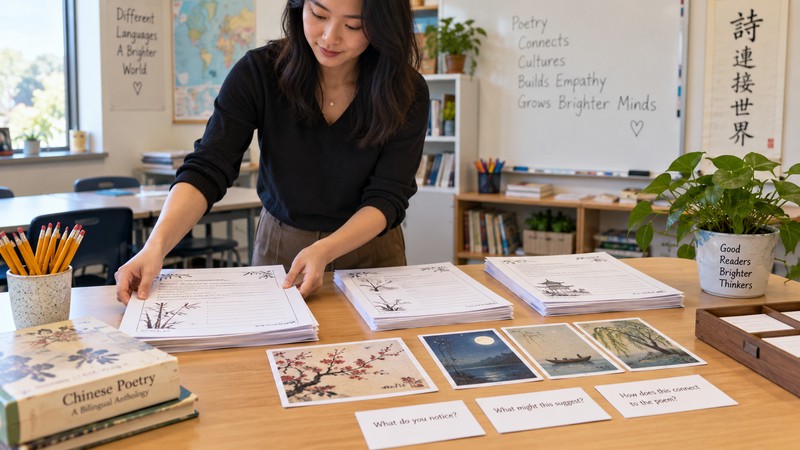
Traditional Chinese students would engage in *bizi* (copying characters and poems) to master both calligraphy and poetic structure, a core precursor to modern worksheets. Beginners often mistake these worksheets for simplistic exercises, but they are carefully crafted to address two common misunderstandings: that Chinese poetry is unapproachable, and that learning it requires fluency in Mandarin alone.
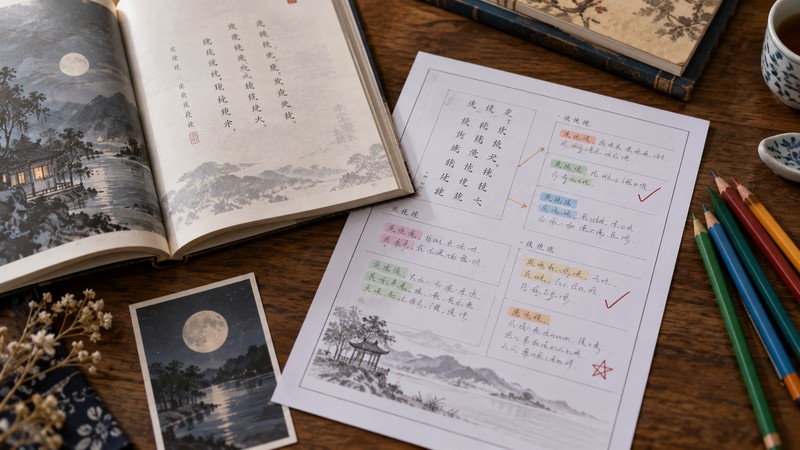
Modern chinese poetry worksheets adapt ancient methods for global learners. For Tang poetry, these worksheets typically include three key components: annotated characters with pinyin, line-by-line breakdowns of tonal patterns (a defining feature of Tang verse), and prompts to analyze imagery or theme.
For example, a worksheet for Li Bai’s *Quiet Night Thought* might ask readers to identify the moon as a symbol of homesickness, rather than just translating each line. This approach helps learners connect abstract poetic concepts to tangible, relatable emotions.
Another critical function of these worksheets is cultural grounding. Unlike Western poetry worksheets that focus solely on literary devices, Chinese Poetry Worksheets Tang poetry worksheets include context about the poet’s era, political events, or personal experiences.
This ensures learners do not just memorize lines, but understand why a poem was written and its place in Chinese literary history. For instance, a worksheet for Du Fu’s *Spring View* would reference the An Lushan Rebellion (755–763), the event that inspired the poem, helping readers grasp the depth of its grief.
Historical and Cultural Background
The origins of chinese poetry worksheets are tied directly to Tang Dynasty (618–907 CE) education, when poetry became a cornerstone of imperial civil service exams (*keju*). To pass these exams, scholars had to master formal poetic structures like the *lüshi* (regulated verse) and *jueju* (quatrain), requiring rigorous practice.
The materials used by Tang students—including copied verses, rhythm drills, and thematic analysis—are the direct ancestors of modern worksheets on sites like ChinesePoetryHub.com.
During the Tang, Chinese Poetry Worksheets poetry was not just an academic skill; it was a social and artistic practice. Poets gathered at banquets to compose verses, and successful candidates in the *keju* were celebrated for their poetic talent.
Worksheets of the era (though not formalized as modern tools) focused on mastering the seven-syllable line, tonal balance, and parallelism—elements that define Tang poetry. For example, Du Fu’s *Spring View* uses parallel structure in lines like “The city’s grass and trees are in ruins; the mountains and rivers remain the same” to emphasize the permanence of nature amid human destruction, a technique taught in modern worksheets.
Modern chinese poetry worksheets adapt these ancient practices to meet the needs of global learners. Unlike Tang scholars, who often had access to private tutors, today’s learners can use free, curated worksheets to study independently.
These worksheets prioritize accessibility: they include pinyin for pronunciation, simplified or traditional characters, and English translations that balance literal accuracy with poetic flow. This adaptation ensures that non-Chinese speakers can engage with Tang poetry without sacrificing its cultural or artistic integrity.
Key Poems, Poets, or Examples
To illustrate how chinese poetry worksheets work, let’s examine four Tang poems and their corresponding worksheet elements, each designed to target a specific learning goal.
First is Li Bai’s (701–762 CE) *Quiet Night Thought* (Jing Ye Si), a quatrain about homesickness. Li Bai, a wandering poet known for his romantic and spontaneous verse, wrote this poem during a period of exile from his family.
A worksheet for this poem would include: pinyin for each line, notes on the character *ming* (bright, referring to the moon), and a prompt to explain how the moon functions as a symbol of longing. This helps learners connect Li Bai’s personal experience to universal themes of missing home.
Second is Du Fu’s (712–770 CE) *Spring View* (Chun Wang), Chinese Poetry Worksheets a lüshi written in 757 when Chang’an (modern Xi’an) was captured by An Lushan’s rebels. Du Fu, a poet of social realism, wrote this poem to mourn the destruction of his city.
The worksheet includes context about the rebellion, a breakdown of the poem’s tonal pattern, and a question asking learners to compare Du Fu’s grief to Li Bai’s more lighthearted tone. This helps learners understand how historical events shape poetic emotion.
Third is Wang Wei’s (701–761 CE) *The Deer Park* (Lu Zhai), a jueju from his mountain poetry series. Wang Wei, a Buddhist monk and poet, used quiet imagery to convey Zen philosophy.
The worksheet focuses on the character *jing* (quiet), with prompts to identify how Wang Wei uses silence to create a sense of peace. This teaches learners to appreciate the subtlety of Tang poetry’s nature imagery, a key part of classical Chinese verse.
Fourth is Bai Juyi’s (772–846 CE) *Song of the Pipa* (Pi Pa Xing), Chinese Poetry Worksheets a long narrative poem about a musician’s sorrow. Bai Juyi, a poet of the late Tang, wrote this after being exiled from the capital.
The worksheet breaks down the poem’s parallel structure, where the musician’s playing mirrors Bai’s own loneliness. It includes questions about how poetic form enhances emotional impact, helping learners analyze complex Tang poetic techniques.
How to Read and Understand It
Reading Tang poetry with chinese poetry worksheets requires a specific approach, different from reading Western poetry. First, learners should read aloud to master tonal patterns—Tang poetry relies on alternating *ping* (level) and *ze* (oblique) tones to create rhythm, like a musical score.
Worksheets often mark these tones, guiding learners to read with the correct cadence. For example, in Wang Wei’s *The Deer Park*, the line “Empty mountains, no one in sight” has a balanced tonal pattern that feels natural when spoken aloud.
Second, learners should focus on imagery rather than literal translation. Chinese Poetry Worksheets Many Tang poems use symbols (like the moon for homesickness, or plum blossoms for resilience) that do not translate directly into English.
Worksheets prompt readers to identify these symbols, helping them grasp the poem’s emotional core. For instance, in *Quiet Night Thought*, the moon is not just a celestial body—it is a companion that bridges distance between the poet and his family.
Third, it is important to engage with historical context. Tang poetry is deeply tied to the era’s politics, society, and philosophy.
Worksheets that include this context help learners avoid misinterpreting poems as generic reflections. For *Spring View*, knowing that Du Fu wrote it amid war makes his lines “The flowers shed tears; the birds grieve” more meaningful, as they reflect his personal suffering and the collective pain of the Tang people.
Finally, learners should use worksheets to practice active writing. Chinese Poetry Worksheets Many worksheets include spaces to copy characters, fill in missing lines, or write short responses to prompts.
This active engagement helps reinforce memory and understanding, unlike passive reading. For example, copying the lines of *The Deer Park* helps learners internalize its quiet rhythm and Zen atmosphere.
Why It Still Matters Today
Chinese poetry worksheets remain relevant today because they make Tang poetry accessible to a global audience. In an era of cross-cultural exchange, learning Tang poetry helps non-Chinese speakers understand Chinese culture beyond stereotypes.
For example, a learner studying *Song of the Pipa* gains insight into the late Tang’s social upheaval and the role of poetry as a tool for expressing personal and collective sorrow.
These worksheets also support language learning. For English speakers, Chinese Poetry Worksheets combining poetry study with Mandarin practice is more engaging than memorizing vocabulary lists.
Worksheets that include pinyin, character breakdowns, and translation help learners build practical language skills while exploring art. This dual benefit makes them valuable for both language learners and poetry enthusiasts.
Additionally, chinese poetry worksheets preserve classical pedagogy in a modern format. The ancient practice of copying and memorizing poems is still effective for learning rhythm and structure, and worksheets adapt it to digital or printable formats.
This ensures that the wisdom of Tang poets—who used verse to comment on life, love, and society—continues to reach new generations.
Frequently Asked Questions
What is the meaning of chinese poetry worksheets?
Chinese poetry worksheets in the Tang Dynasty are educational materials that contain curated poems, analysis prompts, and study questions designed to teach students about classical Chinese poetry. These worksheets typically include famous Tang Dynasty poems by renowned poets such as Li Bai, Du Fu, Wang Wei, and Bai Juyi, along with vocabulary explanations, thematic discussions, and writing exercises to help learners understand and appreciate the artistry of Tang poetry.
Who wrote chinese poetry worksheets and what is the historical context?
Chinese poetry worksheets during the Tang Dynasty were primarily developed by scholars, court officials, and educators within the imperial education system. The Tang Dynasty (618-907 CE) was a golden age for Chinese poetry, and the imperial court established civil service examinations that tested candidates’ poetic abilities. Teachers and scholars created these worksheets to prepare students for these examinations, as poetry composition was a required skill for government positions. The historical context includes the flourishing of literary culture under emperors like Xuanzong and the establishment of the Hanlin Academy.
What literary devices are used in chinese poetry worksheets?
Chinese poetry worksheets in the Tang Dynasty highlight various literary devices including parallelism (对偶), imagery (意象), allusions (用典), tone-painting (声律), and symbolism. Poems often feature vivid natural imagery such as the moon, mountains, rivers, and flowers to convey emotions. Writers employ antithetical balancing of phrases, strategic use of enjambment, and careful attention to tonal patterns. Worksheets also teach about the use of reclusion themes, friendship dedications, and political commentary through subtle metaphorical language.
What is the cultural significance of chinese poetry worksheets?
The cultural significance of Tang Dynasty poetry worksheets lies in their role in preserving and transmitting classical Chinese literary traditions. These worksheets helped establish the standards of poetic excellence that influenced Chinese literature for over a millennium. They reinforced Confucian educational values, promoted literacy among the educated elite, and served as a medium for cultural identity. The worksheets also document the Tang Dynasty’s sophisticated literary culture and have become invaluable historical documents for understanding medieval Chinese society, politics, and aesthetics.
How should chinese poetry worksheets be interpreted?
Chinese poetry worksheets should be interpreted by considering the historical context, the poet’s biography, and the social circumstances surrounding the poem’s creation. Readers should pay attention to the tonal patterns and rhythmic structures unique to classical Chinese poetry. Understanding the symbolism of recurring images (such as bamboo representing integrity or the moon symbolizing nostalgia) is essential. Modern interpreters should also consider the educational purpose of the worksheets themselves, recognizing that they were designed to teach specific literary techniques and moral values valued during the Tang Dynasty.
What Chinese Poetry for Students Means in Tang Poetry How to Read Wang Wei Poetry: Meaning and Background What Chinese Poetry Lesson Plan Means in Tang Poetry Wikipedia