
For anyone drawn to the lyrical, image-rich works of ancient China, chinese poetry in english is not just a translation exercise—it is a bridge connecting Tang dynasty masters to global readers who may never have set foot in a Chinese garden or heard the melody of classical Chinese verse. This practice transforms dense, culturally rooted lines into accessible pieces that retain the emotional core of works like Li Bai’s “Quiet Night Thought” and Du Fu’s “Spring View.” For beginners, it offers a gentle entry into a poetic tradition that shaped Chinese culture for centuries, while for seasoned lovers of poetry, it reveals new layers of meaning in works once confined to ancient script.
What Chinese Poetry In English Means in Chinese Poetry
When people talk about chinese poetry in english, they often mean more than swapping Chinese characters for English words. It is the art of adapting classical Chinese poetry—especially Tang dynasty works, the peak of the tradition—so that English readers grasp not just the plot of a poem, but its tone, imagery, and cultural context.
A common misunderstanding among beginners is that translation is a direct word-for-word swap, but this ignores the unique structure of Chinese verse: lines are short, often use symbolic imagery (like the moon for homesickness), and follow strict rhythmic patterns that do not always translate neatly to English. For example, Li Bai’s famous line about “looking up at the moon, bowing to think of home” relies on the universal symbol of the moon, which English readers recognize, but the subtlety of the poet’s quiet longing for his distant hometown only comes through when a translator balances literal meaning with emotional nuance.
This adaptation process also involves making implicit cultural references explicit for English readers. For instance, many Tang poems reference specific places, historical events, or social customs that may be unfamiliar to someone without deep Chinese cultural knowledge.
A good translation will add brief context (either in footnotes or within the text itself) without overshadowing the poem’s original beauty. For example, when translating Du Fu’s “Spring View,” a translator might note that the poem was written during the An Lushan Rebellion (755-763), a civil war that devastated the Tang empire, to help English readers understand why the poet writes of “the city broken, mountains and rivers remaining” — a line that carries far more weight when readers know the historical context.
Another aspect of chinese poetry in english is that it allows readers to experience the rhythm of Tang verse in a way that feels natural to English speakers. Classical Chinese poetry has a tonal structure, where pitch changes create rhythm, but English relies on stress and syllable count.
Translators often use iambic pentameter or other rhythmic patterns to mimic the original’s flow, though they must avoid forcing rhythm at the cost of meaning. This balance is crucial: a translation that sacrifices emotional depth for strict rhythm will fail to capture the essence of the original.
For example, Wang Wei’s “Deer Park” uses short, sparse lines that mirror the quiet of its mountain setting; a translator who adds unnecessary syllables would break this meditative tone, making the poem feel less authentic to its original spirit.
Historical and Cultural Background
The tradition of translating Tang poetry into English began in the early 20th century, but its roots stretch back to the Tang dynasty itself (618-907 CE), a period often called China’s golden age of poetry. During this time, poetry was not just a literary art—it was a central part of social life, used in imperial exams, diplomatic missions, and even casual gatherings between friends.
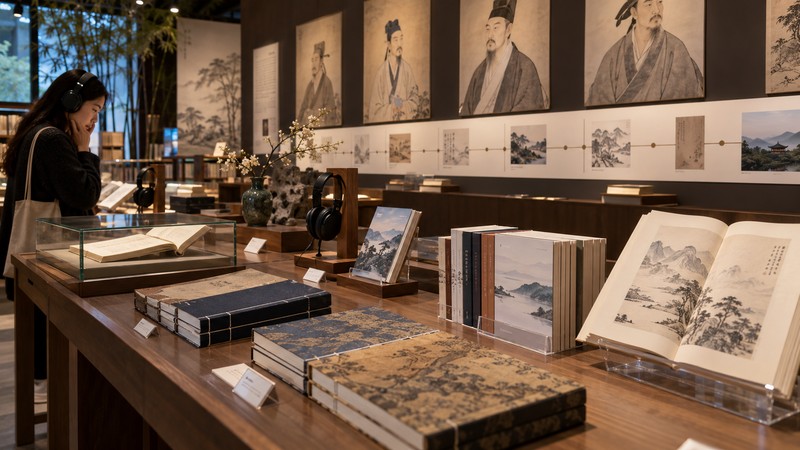
Poets like Li Bai and Du Fu were household names, and their works were recited across the empire. For English-speaking readers, accessing these works in their native language was long limited to academic papers, but the rise of accessible translations in the last century has made Tang poetry a global phenomenon.
Tang poetry’s focus on emotion, Chinese Poetry In English nature, and social commentary makes it particularly well-suited for translation into English. Unlike some earlier Chinese poetic forms that relied on complex characters or allusions, Tang poetry uses clear, vivid imagery that resonates across cultures.
For example, Wang Wei’s mountain poems, which blend Zen philosophy with natural beauty, speak to English readers who love Romantic poetry’s focus on nature. This overlap has helped make Tang poetry a staple in English literature courses, introducing students to a poetic tradition that is both distinct and relatable.
The translation of Tang poetry into English also reflects broader cultural exchange between China and the West. In the 19th and early 20th centuries, Western scholars began translating Chinese works, but it was poets like Ezra Pound, who adapted Tang poetry for English audiences, that brought these works to mainstream attention.
Pound’s translations, though sometimes loose, captured the imaginations of English writers and readers, sparking interest in Chinese poetry that continues today. Modern translators, working on sites like ChinesePoetryHub.com, strive for greater accuracy while retaining the poetic beauty of the original, making Tang poetry accessible to a wider audience.
During the Tang dynasty, Chinese Poetry In English poets often traveled extensively, drawing inspiration from the landscapes they visited and the people they met. This wanderlust is reflected in works like Li Bai’s “Viewing Mount Lu,” which describes the awe-inspiring waterfall at Mount Lu.
When translated into English, this sense of wonder at nature’s grandeur is preserved, allowing modern readers to connect with a poet who felt the same awe centuries ago. This link to the past is one of the reasons why translating Tang poetry into English is more than just a linguistic exercise—it is a way to keep the voices of ancient poets alive for future generations.
Key Poems, Poets, or Examples
To understand how chinese poetry in english works, it helps to look at four iconic Tang poems and their translations, each revealing a different aspect of the tradition.
First, Li Bai’s (701-762) “Quiet Night Thought” (Jing Ye Si). Chinese Poetry In English Written during a period of exile, this short quatrain captures the universal feeling of homesickness.
The original lines are: “Before my bed, a pool of bright light / I thought it was frost on the ground / I lift my head to look at the moon / I bow my head to think of home.” Translators often retain this simple, direct language, since the poem’s power lies in its clarity. For English readers, the moon as a symbol of homesickness is familiar from works like Shakespeare’s *Romeo and Juliet*, so the poem resonates immediately.
This translation works because it keeps the emotional core intact, even as it adapts the line structure to English verse. For more about Li Bai, the Immortal Poet, visit our dedicated page.
Second, Du Fu’s (712-770) “Spring View” (Chun Wang). Written in 757, during the An Lushan Rebellion, this poem is a powerful meditation on war and loss.
The original lines include “The capital is broken, mountains and rivers remain / Cities in spring, grass and trees grow deep / I feel sad at the time, flowers shed tears / I hate parting, birds startle the heart.” Translators often add context about the rebellion to help English readers understand the poem’s gravity. For example, a translator might note that the “broken capital” refers to Chang’an, the Tang capital that was captured by rebel forces.
This context turns a simple poem into a story of national grief, making it relevant to modern readers who have experienced conflict.
Third, Wang Wei’s (701-761) “Deer Park” (Lu Zhai). Chinese Poetry In English A master of mountain and water poetry, Wang Wei’s work blends Zen Buddhism with natural imagery.
The original lines: “Empty mountains, no one sees a person / But hear the sound of voices / The sun’s rays enter the deep forest / And shine again on the green moss.” Translators focus on the quiet, meditative quality of the poem, using short lines to mimic the original’s sparse structure. For English readers, this poem feels like a nature meditation, similar to works by Wordsworth, making it easy to appreciate its Zen-inspired calm.
For more about Wang Wei, the Poet-Painter of Mountains, visit our dedicated page.
Fourth, Li Bai’s “Viewing Mount Lu Waterfall” (Wang Lu Shan Pu Bu). This poem celebrates the beauty of nature, with lines like “The sunlit incense burner produces purple smoke / A waterfall hangs in front of the river, nine thousand feet down / Flying straight down three thousand feet / I suspect it’s the Milky Way falling from the sky.” Translators use vivid language to capture the awe of the original, with phrases like “flying straight down” that convey the waterfall’s power.
English readers, used to Romantic poetry’s celebration of nature, connect with Li Bai’s sense of wonder, making this poem a popular introduction to Tang poetry.
How to Read and Understand It
Reading chinese poetry in english does not have to be intimidating—here are practical tips for beginners, teachers, and poetry lovers.
First, start with short poems. Many Tang poems, like “Quiet Night Thought,” are only four lines long, making them easy to digest.
Focus on the imagery: look for symbols like the moon (homesickness), mountains (strength or solitude), and flowers (beauty or fragility). For example, in “Spring View,” the flowers shedding tears are a symbol of the poet’s sadness, so noticing that helps you understand the poem’s emotion.
Avoid overcomplicating the process at first; let the images speak for themselves before diving into deeper analysis.
Second, compare translations. Chinese Poetry In English No two translators will render a Tang poem the same way, so reading multiple translations can reveal new layers of meaning.
For “Quiet Night Thought,” one translator might use “bright light” while another uses “silver light”—the latter emphasizes the moon’s brightness more, which changes the tone slightly. Sites like ChinesePoetryHub.com offer multiple translations for many poems, allowing readers to compare and choose the version that resonates most with them.
This practice also helps you understand the challenges of translation, as different choices can alter a poem’s mood.
Third, read slowly. Tang poetry is meant to be recited, so take time to savor each line.
In English, this means paying attention to rhythm and stress, just like you would when reading a sonnet. For example, Wang Wei’s “Deer Park” has a slow, meditative rhythm, so reading it at a calm pace helps you feel the empty mountains and quiet of the forest.
Rushing through the lines will make you miss the subtle beauty of the poem, so take a breath and let the words sink in.
Fourth, look up context. Chinese Poetry In English If a poem mentions a place or event you don’t know, use footnotes or a reliable resource (like ChinesePoetryHub.com) to learn more.
For example, understanding that “Spring View” was written during the An Lushan Rebellion makes the poem’s grief feel more real, so this step is crucial for fully appreciating the work. Context adds depth to the poem, turning it from a simple piece of verse into a window into the lives of people who lived centuries ago.
Why It Still Matters Today
In a world where cross-cultural connection is more important than ever, chinese poetry in english remains a vital tool for building understanding between cultures.
First, it introduces English readers to a poetic tradition that is both ancient and modern. Chinese Poetry In English Tang poetry’s themes—love, loss, nature, and longing—are universal, so readers can relate to works like “Quiet Night Thought” regardless of their background.
This connection helps break down stereotypes about Chinese culture, showing that it is not just about history, but about human emotion. For example, a teenager in the U.S.
who has felt homesick at boarding school can connect directly to Li Bai’s lines, even if they have never been to China.
Second, it supports language learning. For English speakers learning Chinese, reading Tang poetry in English can help them grasp the meaning of Chinese characters without being overwhelmed by the original script.
For example, seeing the translation of “Quiet Night Thought” alongside the original can help learners recognize the character for “moon” (yue) and understand its symbolic meaning. This dual approach makes language learning more engaging, as it ties new words to familiar, emotional works.
Third, it preserves cultural memory. Chinese Poetry In English Many Tang poems are over a thousand years old, and translating them into English ensures that they will not be lost to time.
Sites like ChinesePoetryHub.com work to digitize and translate these works, making them accessible to anyone with an internet connection. This preservation is important because Tang poetry is not just a collection of works—it is a window into the lives and minds of people who lived centuries ago, offering insights into their values, fears, and joys.
Fourth, it fosters cross-cultural dialogue. When English readers engage with Tang poetry, they often ask questions about Chinese culture, history, and language.
This curiosity leads to deeper conversations, helping to build bridges between China and the West. For example, a student reading “Spring View” might ask about the An Lushan Rebellion, leading to a discussion about Chinese history and its impact on culture.
These conversations are small steps, but they help create a more connected and understanding world.
Frequently Asked Questions
What is the meaning of chinese poetry in english?
Chinese poetry in English refers to English-language translations, interpretations, or adaptations of classical Chinese poetry, including works from the Tang Dynasty (618-907 CE). Since the original Tang poems were written in Classical Chinese, “Chinese poetry in English” represents the bridge between ancient Chinese literary tradition and modern English-speaking audiences through translation.
Who wrote chinese poetry in english and what is the historical context?
Chinese poetry in English was created by various translators and scholars over centuries. Notable translators include Arthur Waley, David Hinton, and Burton Watson, who translated Tang Dynasty poets like Li Bai, Du Fu, and Wang Wei. The practice emerged as Western scholars and missionaries became interested in Chinese culture, with significant growth during the 20th century as cross-cultural exchange increased.
What literary devices are used in chinese poetry in english?
Tang Dynasty poetry employs numerous literary devices that translators strive to preserve, including parallelism, imagery, allusion, symbolism, and careful word placement. The original poems often feature concise language with rich visual imagery, emotional restraint, and references to nature and Taoist or Buddhist philosophy. Translators must balance literal accuracy with maintaining the aesthetic qualities and rhythmic patterns of the original works.
What is the cultural significance of chinese poetry in english?
Chinese poetry in English allows Western audiences to access one of the world’s greatest poetic traditions, fostering cross-cultural understanding and appreciation. It has influenced English-language poets and contributed to global literary discourse. The translations preserve the philosophical depth, artistic beauty, and historical context of Tang Dynasty works while making them accessible to a broader international audience.
How should chinese poetry in english be interpreted?
Chinese poetry in English should be interpreted with awareness of both the original Chinese context and the translation process. Readers should consider the translator’s choices, the cultural references embedded in the poems, and the differences between Classical Chinese and English expression. Understanding the historical period, the poets’ personal circumstances, and the philosophical traditions (Taoism, Buddhism) that influenced Tang poetry enriches the interpretation of these translated works.
Poem Meaning Website: 7 Hidden Meanings You Missed at First Chinese Poem Generator: 7 Hidden Meanings You Missed at Firs Chinese Poetry Tang Dynasty: Major Poets, Poems and Legacy Wikipedia