Quick answer: The received Analects presents Confucius as a teacher and interpreter of the Classic of Poetry; the passages discussed here do not establish that he authored its poems. In this teaching tradition, the Analects treats the “Three Hundred Poems” as training for attention, emotion, speech, social judgment, and public service. The claim that he compiled the anthology belongs to later tradition and should be labeled that way.
The search phrase “Chinese poetry Confucius” often combines three different questions. Did Confucius write poems? Did he compile the Classic of Poetry? What did he think poetry was for? Only the third question has repeated, direct answers in the received Analects. The first requires checking each attributed poem and its source; the second must be discussed as a traditional attribution.
Keeping these questions separate does not reduce Confucius’s influence. It makes that influence clearer. His importance lies in how poetry became part of education, ethical reflection, ritual culture, social observation, and skilled speech—not in attaching his name as author to anonymous songs composed across earlier generations.
Separate authorship, teaching, and compilation tradition
| Claim | What the evidence supports | Safer wording |
|---|---|---|
| “Confucius wrote the Classic of Poetry.” | The anthology contains 305 songs and odes from before and around his era; the individual works are not presented as his compositions. | Confucius became a major teacher and interpreter of the Poems. |
| “Confucius compiled the book.” | Later tradition credits him with selecting or arranging the collection, but that is not the same as a contemporary signed editorial record. | The anthology was traditionally believed to have been compiled by Confucius. |
| “The Analects gives one theory of poetry.” | Several short passages discuss different uses: ethical orientation, speech, observation, association, complaint, knowledge, and government. | The passages became influential but do not form one complete modern treatise. |
| “Confucian reading makes every poem a moral lesson.” | Later interpretation often emphasized ethical and political use, yet the poems also contain court, ritual, labor, love, marriage, war, and local-song material. | Read the poem first, then compare how particular commentators used it. |
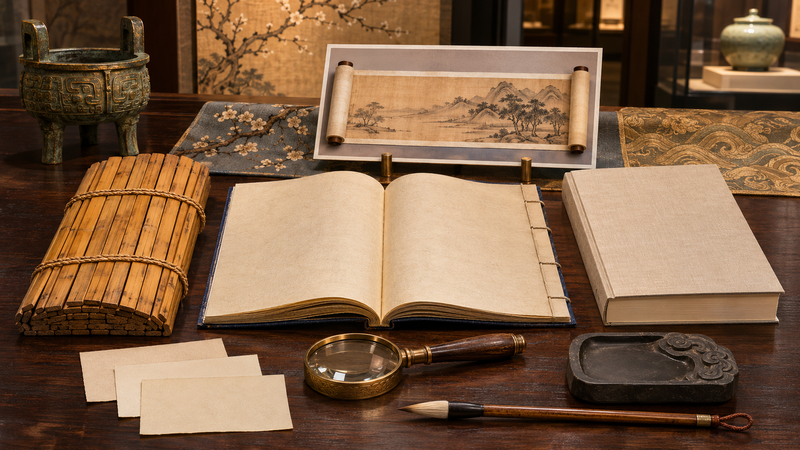
The Metropolitan Museum of Art describes its Southern Song Odes of the State of Bin handscroll as illustrating poems from the 305-work Shijing, “traditionally believed” to have been compiled by Confucius. That wording is useful: it records the tradition without turning tradition into undisputed authorship.
What four Analects passages actually say about poetry
The Chinese Text Project edition of the Analects lets readers compare the Chinese text, received chapter structure, and translations. Four passages show that “knowing the Poems” was expected to change how a learner thought, spoke, and acted. The short Chinese excerpts below come from the received text. The English explanations are editorial paraphrases, not direct quotations from a named translator.
| Passage | Chinese excerpt and English paraphrase | What not to claim |
|---|---|---|
| 2.2 | 「思無邪」 Editorial paraphrase: the Poems are summed up in a phrase often read as thought without deviation; its interpretation should not be mistaken for a claim of authorship. |
It does not say Confucius wrote all three hundred. |
| 13.5 | 「使於四方,不能專對」 Editorial paraphrase: memorization is insufficient if the learner cannot govern effectively or respond independently on a diplomatic mission. |
Recitation alone is not treated as proof of practical judgment. |
| 16.13 | 「不學詩,無以言」 Editorial paraphrase: studying the Poems equips the learner for speech and social exchange. |
The point is broader than literary appreciation in private. |
| 17.9 | 「可以興,可以觀,可以群,可以怨」 Editorial paraphrase: the Poems can stir feeling, aid observation and fellowship, and express complaint. The passage also connects them with family, public service, and knowledge of plants and animals. |
The passage does not reduce every poem to one moral code. |
Stanford’s Encyclopedia of Philosophy entry on Confucius likewise points to multiple Analects scenes in which he explains or praises the Classic of Odes. Poetry appears beside ritual and music within a larger educational practice. That context is more precise than calling Confucius simply “a Chinese poet.”
Why poetry meant more than private self-expression
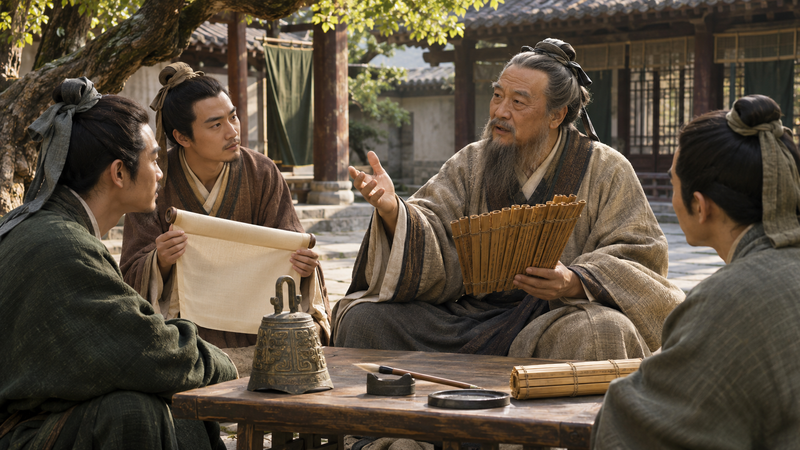
In the passages above, poetry is something a person can recite, interpret, quote, apply, and use in conversation. The learner is not judged only by emotional sincerity. He is expected to recognize situations, speak appropriately, understand relationships, and transfer textual memory into public judgment.
Analects 13.5 is especially sharp. Someone may recite the three hundred poems and still fail if entrusted with government or sent abroad without the ability to answer independently. Poetry education therefore includes application. A memorized line becomes valuable when the speaker understands its setting, implication, audience, and ethical pressure.
Analects 17.9 widens the field. The Poems can awaken or stimulate, help a reader observe, support social association, and provide a language for complaint. They also teach names for birds, animals, plants, and trees. This is not a modern split between “literature” and “useful knowledge.” Feeling, language, society, politics, ritual, and the natural world remain connected.
The compilation tradition and its evidence boundary
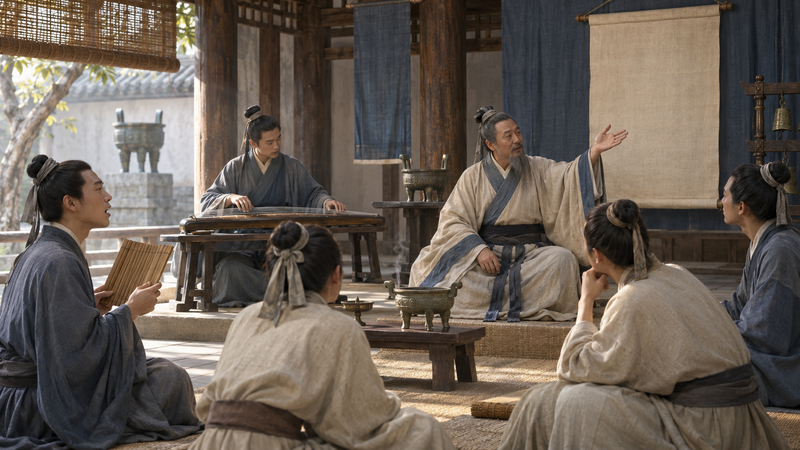
Readers often encounter a neat story: thousands of old songs existed, Confucius selected about three hundred, and the resulting book became the Classic of Poetry. That account became highly influential. It is still different from saying that the surviving poems contain an editor’s note signed by Confucius or that the Analects itself narrates a complete compilation project.
The safest sentence is the museum’s: the work was traditionally believed to have been compiled by Confucius. If an article wants to argue more strongly, it must name the later historical source and explain the gap between that account and Confucius’s lifetime.
This boundary also protects the poems themselves. The anthology’s voices include court praise, ritual hymns, local airs, labor, longing, marriage, separation, warfare, and protest. Attributing every voice to Confucius as author collapses the collection’s historical and social variety.
How to read Chinese poetry through Confucian context without forcing one moral
- Read the poem’s words and form first. Identify speaker, scene, action, repetition, sound, and uncertainty before adding a philosophical label.
- Locate the source. A poem in the Classic of Poetry, a Tang poem, and a modern lyric do not share one date or institutional setting.
- Identify the interpreter. Confucius in the Analects, a Han preface, a Song commentator, and a modern translator may ask different questions.
- Separate use from origin. A later teacher can use an old love song for ethical instruction without proving that the song was composed for that lesson.
- Compare translations against the Chinese. Readers can use our guide to poems in Chinese characters and the method for reading Chinese poetry in English.
Stephen Owen’s Harvard-hosted Readings in Chinese Literary Thought notes that Analects comments on the Poems became deeply influential. He also cautions readers not to expect those brief remarks to function like a later systematic treatise. That is a helpful limit: influence does not require pretending that every question was answered in one place.
Questions about Chinese poetry and Confucius
Did Confucius write the Classic of Poetry?
No. The 305 works are not presented as poems authored by Confucius. Later tradition associates him with selecting or compiling the anthology, but that claim should be labeled as tradition.
Did Confucius write poems?
The Analects passages discussed here establish his role as a teacher and interpreter, not authorship of the Shijing. A poem attributed to Confucius in a later source needs a separate attribution check; a traditional credit alone does not establish that he composed it.
Why did Confucius value poetry?
The Analects connects poetry with ethical attention, effective speech, observation, social relations, remonstrance, practical judgment, and knowledge of the natural world.
What are the Three Hundred Poems in the Analects?
The phrase refers to the anthology later known as the Classic of Poetry, Book of Odes, or Shijing. The received collection contains 305 works, while “three hundred” functions as a rounded traditional designation.
Sources and attribution boundaries
- Chinese Text Project: The Analects — primary-text locator for passages 2.2, 13.5, 16.13, and 17.9.
- Stanford Encyclopedia of Philosophy: Confucius — academic context for the received text, ritual, music, and the Odes.
- The Metropolitan Museum of Art: Odes of the State of Bin — object record stating the 305-poem collection and traditional compilation attribution.
- Stephen Owen: Readings in Chinese Literary Thought — scholarly context for the later influence and limits of the Analects remarks.
Boundary: This article explains the received Analects and later attribution tradition. It does not claim that every recorded sentence is a modern verbatim transcript or that one Confucian reading exhausts the meanings of the poems.