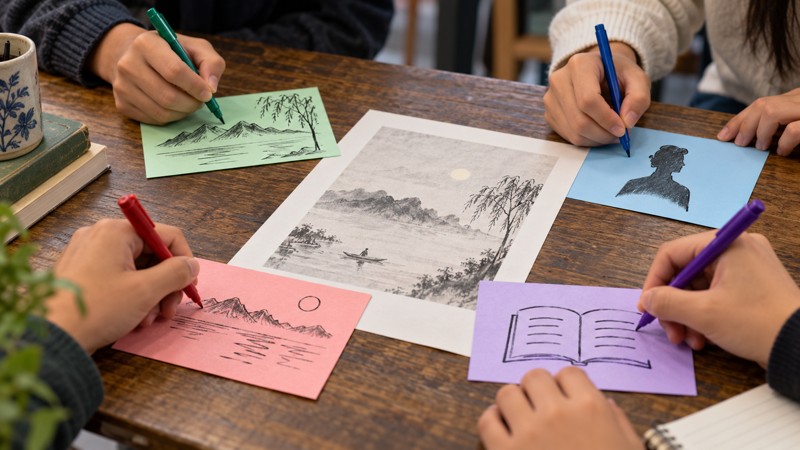
For anyone looking to unlock the beauty of classical Chinese poetry, a well-crafted Chinese poetry lesson plan rooted in Tang Dynasty works is an essential starting point. Unlike Western poetry frameworks that often prioritize rhyme and meter first, Tang poetry lessons center on imagery, emotional subtlety, and cultural context—elements that resonate deeply with modern learners seeking cross-cultural understanding.
Quick Answer
A Chinese poetry lesson plan should help students read the poem's words, image pattern, speaker, historical context, and emotional turn before jumping to a single summary.
Basic Facts
| Teaching object | Classical Chinese poetry reading |
|---|---|
| Core layers | Text, imagery, speaker, form, allusion, and context |
| Classroom use | Close reading, comparison, recitation, and discussion |
| Common mistake | Replacing the poem with a simplified moral lesson |
Quick reference: The teaching value comes from a repeatable reading sequence: literal sense, poetic image, context, interpretation, and student response.
This guide is designed for educators, parents, and self-learners aiming to introduce Tang poetry in a way that feels accessible, meaningful, and true to its origins.
What Chinese Poetry Lesson Plan Means in Chinese Poetry
A Chinese poetry lesson plan, when tailored to classical Chinese traditions, is far more than a list of poems to memorize—it is a structured approach to decoding the layers of meaning, cultural references, and emotional nuance that define works from China’s literary golden age. For beginners, the most common misunderstanding is equating “learning Chinese poetry” with reciting lines without grasping their context, but a thoughtful lesson plan avoids this pitfall by grounding every poem in its historical and social setting.
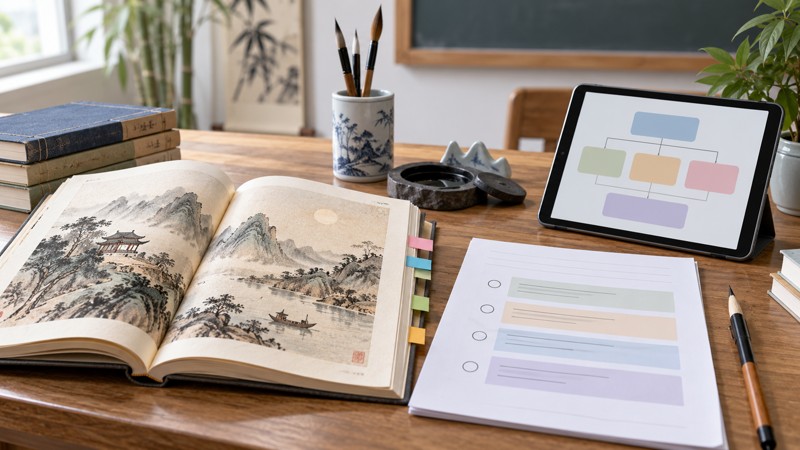
In classical Chinese education, poetry was not a separate subject but a core part of literacy, tied to Confucian ideals of self-cultivation and social etiquette. A good lesson plan for Tang poetry reflects this by linking poems to the values and daily life of the era.
For example, when teaching a poem about friendship, a lesson might include a brief explanation of how Tang scholars often exchanged poems as a way to express respect or bid farewell, rather than viewing it as a creative exercise in isolation.
Another key element of a Chinese poetry lesson plan for Tang works is balancing simplicity with depth. Beginners need to start with short forms like the jueju (four-line poem) which are concise enough to hold their attention, while still containing enough layers to explore.
This approach ensures that learners do not feel overwhelmed, and instead build confidence as they move to longer, more complex forms like the lushi (eight-line regulated poem) later on.
Historical and Cultural Background
The Tang Dynasty (618–907 CE) is universally regarded as the peak of classical Chinese poetry, and any Chinese poetry lesson plan focused on this era must first acknowledge why this period was so transformative. The Tang was an era of economic prosperity, global trade, and cultural openness—poets traveled widely, interacted with people from different regions, and drew inspiration from diverse experiences, from frontier battles to mountain retreats.
Poetry was also a requirement for passing the imperial civil service exam, meaning that even officials were skilled poets, making it a central part of public life.
A lesson plan that incorporates this historical context helps learners understand why Tang poetry feels both timeless and specific. For instance, Chinese Poetry Lesson Plan when studying Du Fu’s works, educators can explain that his most powerful poems were written during the An Lushan Rebellion (755–763 CE), a civil war that devastated the dynasty.
This context turns lines about “broken cities” into vivid accounts of real suffering, rather than abstract metaphors. Similarly, Li Bai’s love of wandering and wine can be tied to his status as a scholar-official who often left the capital to escape political intrigue, adding depth to his romantic, free-spirited verses.
Tang poetry also reflects the dynasty’s interest in nature and spiritualism. Many poets, like Wang Wei, were influenced by Buddhism and Taoism, and their poems often focus on quiet moments in the natural world—an empty mountain, a flowing stream, a solitary deer.
A lesson plan that highlights this connection helps learners see how poetry was a way to connect with the divine, not just a form of entertainment. This cultural background is critical for non-native speakers, as it explains why Tang poetry values “empty space” and subtlety over overt emotion.
Key Poems, Poets, or Examples
To make a Chinese poetry lesson plan effective, it must include concrete examples that showcase the diversity of Tang poetry. Four works stand out as ideal for beginners, each offering unique insights into the era and its poetic traditions.
The first example is Li Bai’s *Quiet Night Thought* (Jing Ye Si), written around 726 CE when the poet was 25 years old. Li Bai (701–762 CE) is known as the “Poet Immortal” for his romantic, whimsical style, and this short jueju is one of the most famous poems in Chinese literature.
The poem’s simple imagery—moonlight like frost on the ground, looking up at the moon, thinking of home—captures universal homesickness, making it perfect for beginners. A lesson plan can use this poem to teach about moonlight as a symbol of longing in Chinese culture, and practice reading aloud to capture its gentle rhythm.
The second example is Du Fu’s *Spring View* (Chun Wang), Chinese Poetry Lesson Plan written in 757 CE during the An Lushan Rebellion. Du Fu (712–770 CE) is called the “Poet of History” because his poems document the social upheaval of his time.
*Spring View* opens with “A broken city, mountains and rivers remain; grass and trees grow deep in spring” — lines that contrast the persistence of nature with the destruction of human society. This poem helps learners understand how Tang poetry reflects historical events, and encourages discussions about how art can bear witness to suffering.
The third example is Wang Wei’s *The Deer Park* (Lu Zhai), part of his series of mountain poems written around 740 CE. Wang Wei (701–761 CE) was not only a poet but also a painter, and his works are famous for their vivid visual imagery.
*The Deer Park* reads: “Empty mountains, no one seen; but hear voices, echo in the woods; sunlight filters through the deep forest, shining back on green moss.” This poem is ideal for teaching about quietude and nature in Tang poetry, and how less is often more—Wang Wei uses minimal words to create a vast, serene landscape.
The fourth example is Wang Changling’s *Borderline Song* (Chu Sai Qu), Chinese Poetry Lesson Plan written around 730 CE. Wang Changling (698–756 CE) was a master of frontier poetry, which explores the lives of soldiers stationed on Tang’s northern borders.
The poem includes lines like “Still not returning from breaking Loulan; how many generals have died in past wars?” This work helps learners understand the theme of sacrifice in Tang poetry, and how it balances the glory of empire with the cost of war.
How to Read and Understand It
A successful Chinese poetry lesson plan must include practical guidance for reading and analyzing Tang poetry, as beginners often struggle with tonal patterns, cultural references, and translation limits. The first rule is to read the poem aloud slowly—Tang poetry is tonal, meaning that the pitch of each character changes to convey meaning, and reading aloud helps learners internalize this rhythm.
For example, in *Quiet Night Thought*, the line “Before my bed, moonlight is frost” has a gentle, flowing rhythm that mirrors the quiet of the night.
Another key tip is to focus on imagery before diving into literal translations. Many beginners make the mistake of translating every word directly, Chinese Poetry Lesson Plan which can lose the poem’s poetic feel.
Instead, encourage learners to visualize the scene: for *The Deer Park*, picture the empty mountain, the echo of voices, the sunlight on moss. This approach helps them connect with the poem’s emotion, even if they don’t understand every character.
Translations also play a critical role in learning Tang poetry. The best translations balance accuracy with poetic flow—for example, Arthur Waley’s translation of *Quiet Night Thought* is widely praised for preserving the poem’s simplicity and emotional depth.
A lesson plan can include multiple translations to show how different translators interpret the same lines, helping learners understand that poetry is subjective.
Finally, a good lesson plan should include opportunities for discussion. Chinese Poetry Lesson Plan After reading a poem, ask learners to share their favorite lines, what emotions they feel, and how the poem connects to their own experiences.
For example, *Spring View* can lead to discussions about war and loss, while *The Deer Park* can spark conversations about finding peace in nature. This interactive approach turns passive reading into active engagement, making the lesson plan more effective.
Why It Still Matters Today
In an increasingly globalized world, a Chinese poetry lesson plan focused on Tang works offers unique value for cross-cultural understanding. Tang poetry is one of China’s most recognizable cultural exports, and learning it helps non-native speakers gain insight into Chinese values like family, nature, and loyalty.
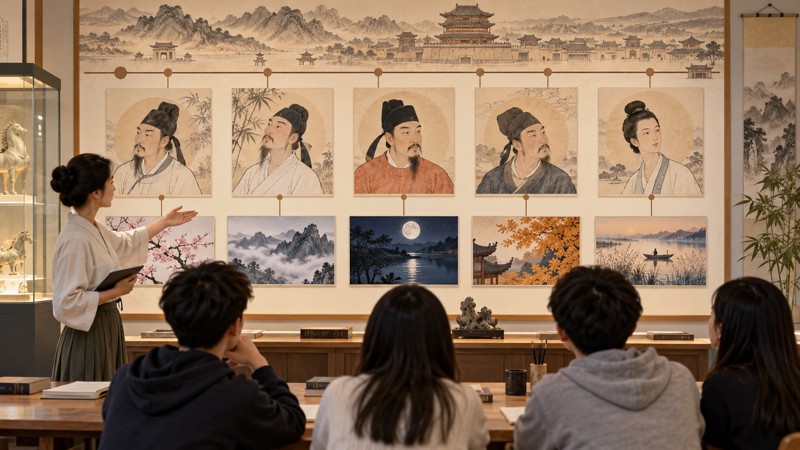
For example, *Quiet Night Thought*’s theme of homesickness is universal, so it resonates with learners from all backgrounds, while *Spring View*’s critique of war is timeless.
Tang poetry also plays a role in preserving cultural memory. For Chinese communities around the world, Chinese Poetry Lesson Plan learning Tang poetry is a way to connect with their heritage, and a well-structured lesson plan makes this accessible for children and adults alike.
Many schools in the West now include Tang poetry in ESL classes because its imagery is vivid and easy to grasp, helping learners improve their English while exploring a new culture.
Beyond cultural and educational benefits, Tang poetry teaches critical thinking and empathy. Analyzing a poem like *Borderline Song* requires learners to consider the perspective of soldiers, even if they have never experienced war.
This exercise builds empathy, as it encourages learners to step into someone else’s shoes. A Chinese poetry lesson plan that includes these themes helps develop well-rounded, culturally aware individuals who can navigate a diverse world.
Frequently Asked Questions
What is the meaning of chinese poetry lesson plan?
A chinese poetry lesson plan is an educational framework designed to teach students about the poetry of the Tang Dynasty (618-907 CE), one of China’s golden ages of literature. These lesson plans typically cover famous poets such as Li Bai, Du Fu, Wang Wei, and Bai Juyi, introducing students to the forms, themes, and cultural context of Tang Dynasty verse.
Who wrote chinese poetry lesson plan and what is the historical context?
Chinese poetry lesson plans are modern educational tools created by teachers and curriculum developers, not historical documents from the Tang Dynasty. The poetry itself was written by renowned Tang Dynasty poets like Li Bai (701-762), Du Fu (712-770), Wang维 (699-761), and Li Shangyin (813-858). The Tang Dynasty represented a peak in Chinese literary history, with poetry becoming a required skill for civil service examinations and a central part of aristocratic culture.
What literary devices are used in chinese poetry lesson plan?
Tang Dynasty poetry employs numerous literary devices including: imagery (especially nature imagery of mountains, rivers, moon, and flowers); parallelism (couplet structure with balanced phrases); allusion (references to historical events and mythology); personification (attributing human qualities to natural elements); tone-painting (using characters to suggest visual or auditory impressions); and constrained writing forms like the regulated verse (lüshi) with strict tonal patterns and rhyme schemes.
What is the cultural significance of chinese poetry lesson plan?
Chinese poetry lesson plans hold cultural significance by preserving and transmitting one of the world’s great literary traditions. Tang poetry reflects core values of Chinese civilization including harmony with nature, Confucian ideals, Buddhist spirituality, and Daoist mysticism. These lesson plans help students appreciate how Tang poets balanced personal expression with social commentary, making the poetry relevant to understanding both historical Chinese society and timeless human experiences.
How should chinese poetry lesson plan be interpreted?
Chinese poetry lesson plans should be interpreted with attention to both the explicit meaning and the implicit connotations within each poem. Students should consider the poet’s biographical context, the historical circumstances, and the cultural symbolism embedded in images like the moon (nostalgia), bamboo (integrity), or autumn (melancholy). Modern interpretation also involves comparing translations, understanding how poetic devices create meaning, and connecting Tang Dynasty poetry to contemporary themes of nature, identity, and social responsibility.
Chinese Poem Generator: 7 Hidden Meanings You Missed at Firs Chinese Poetry Tang Dynasty: Major Poets, Poems and Legacy Poem Generator App: 7 Hidden Meanings You Missed at First Re Wikipedia