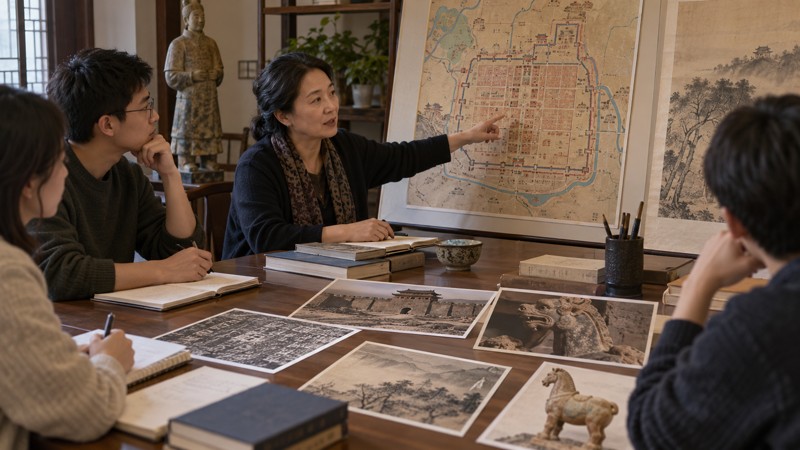
For anyone new to classical Chinese poetry, spring view du fu is far more than a simple topic—it’s a gateway to understanding how Tang Dynasty poets wove personal grief, historical trauma, and seasonal beauty into timeless verse. This article breaks down its meaning, context, and enduring relevance.
What Spring View Du Fu Means in Chinese Poetry
Spring view du fu centers on Du Fu’s iconic Tang poem *Chun Wang* (translated as “Spring View” or “Spring Prospect”), and the broader poetic tradition of using spring imagery to mirror human and national experience. Unlike Western poems that often frame spring as a symbol of renewal, classical Chinese poets frequently use it as a mirror for emotional or political upheaval.
For beginners, the biggest misconception is that the poem is just a celebration of spring—this misses its core purpose as a lament for a fractured world.
The poem’s central tension lies in the fusion of scene and emotion, a technique called qing jing jiao rong (情景交融) in Chinese poetics. Du Fu does not describe spring as cheerful; instead, blooming flowers “shed tears” and birds’ songs feel like heartbreak.
Every natural element is filtered through his sorrow, making spring a character in itself rather than a backdrop. This is not mere personification—it’s a way to express collective grief by linking individual emotion to the world around him.
Spring view du fu is also tied to the Tang ideal of shi (诗, or poetry as truth). Du Fu’s work was seen as a record of his time, earning him the title “the poet of history.” The phrase does not refer to one single poem alone, but to a larger theme in Tang poetry where seasonal changes become a way to comment on loss, resilience, and the passage of time.
This makes it a key entry point for anyone learning to read classical Chinese poetry, as it distills core techniques and cultural values into a concise, powerful work.
Historical and Cultural Background
To understand spring view du fu, one must ground it in the chaos of the An Lushan Rebellion (755–763), a turning point that shattered the Tang Dynasty’s golden age. Du Fu lived from 712 to 770, a period that began with the prosperous Kaiyuan Era (713–741) and ended with the empire in ruins.
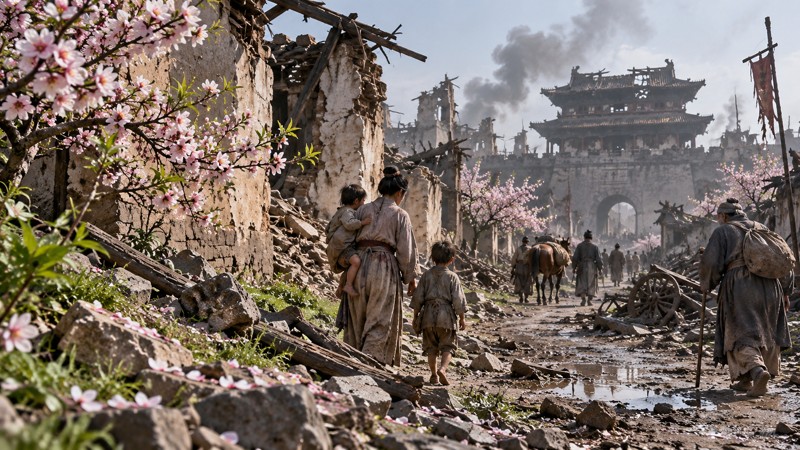
The rebellion, led by general An Lushan, captured the capital Chang’an (modern Xi’an) and forced Emperor Xuanzong to flee, leaving millions displaced.
In 757, Du Fu was captured and imprisoned in Chang’an while trying to join the emperor. Spring View Du Fu It was during this time that he wrote “Spring View.” The poem’s opening lines—“The country hills remain, the cities spring grass grow; We grieve at times, flowers shed tears”—reflect the emptiness of a city once bustling with over a million people, now overgrown with weeds and abandoned by its inhabitants.
Du Fu’s own family was scattered, separated by war, so his grief was both personal and collective.
Tang Dynasty culture elevated poetry as a primary form of social and artistic expression. Poets were expected to reflect the realities of their time, not just write about abstract beauty.
This context is why spring view du fu resonates so deeply with Chinese readers: it is not just a poem, but a piece of cultural memory. It is taught in every Chinese middle school, referenced in art, and passed down through generations as a testament to the empire’s resilience amid crisis.
Key Poems, Poets, or Examples
The most direct example of spring view du fu is Du Fu’s own *Chun Wang* (757), the work that defines the phrase. Its full five-character lines are concise, layered, and charged with emotion: “The country hills remain, the cities spring grass grow; We grieve at times, flowers shed tears; We hate parting, birds startle the heart; The beacon fires have lasted three months; Home letters worth ten thousand gold; I scratch my white hair, it gets thinner; Can’t even hold a hairpin.” This poem ties every spring detail to national loss and personal longing, making it the cornerstone of the theme.
Another example is Li Bai’s *Quiet Night Thoughts* (726), a classic Tang poem about homesickness. While Li Bai’s work is intimate—focused on a single night’s moonlight and longing for home—it shares the spring theme of emotional resonance.
Unlike Du Fu’s collective sorrow, Li Bai’s is personal, showing how spring can evoke different kinds of longing. This contrast expands the idea of spring view du fu to include both individual and collective experience.
(For deeper analysis, see Complete Analysis of Li Bai’s “Quiet Night Thoughts”.)
Wang Wei’s *Deer Enclosure* (747) offers a contrasting spring view. Wang Wei, a poet-painter, wrote of a quiet spring forest: “Empty mountains, no one seen; Only voices heard, echoing back; Sunlight filters through the deep woods; Shines on green moss.” This poem uses spring to evoke solitude and tranquility, showing that spring in Tang poetry is not always tragic.
It adds depth to spring view du fu by presenting a different emotional range of seasonal imagery.
Bai Juyi’s *Everlasting Regret* (806) is a longer narrative poem that uses spring imagery to explore love and loss. The story of Emperor Xuanzong and Yang Yuhuan includes lines like “The pear blossoms in the spring breeze fade, leaving only the empty palace halls.” Here, spring symbolizes the end of a golden age, echoing Du Fu’s themes of loss.
This shows how spring view du fu is a recurring motif in Tang poetry, used to comment on power, love, and the fragility of time.
How to Read and Understand It
For beginners, reading spring view du fu requires more than just translating words—it requires engaging with its rhythm and emotional core. Start with the original Chinese lines, even if you don’t understand every character.
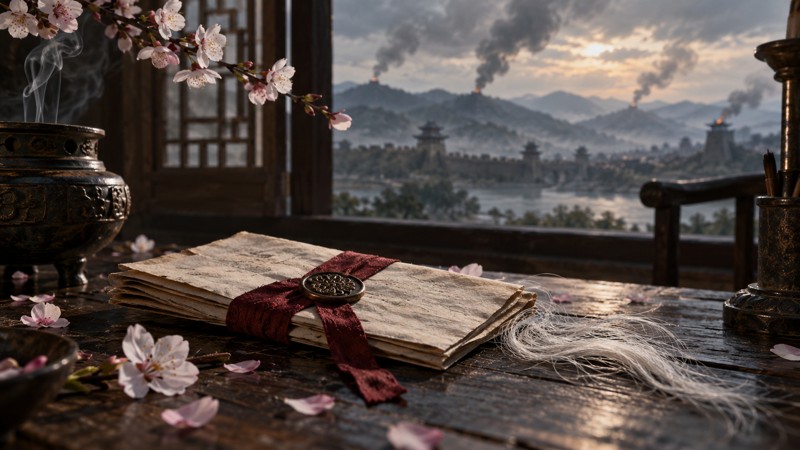
Tang poetry follows strict tonal patterns, and the five-character lines of “Spring View” have a slow, heavy rhythm that mirrors Du Fu’s sorrow. Reading aloud helps you feel this rhythm: each line’s pause emphasizes the weight of the words, making the grief tangible.
Focus on the fusion of scene and emotion, the core technique of qing jing jiao rong. When Du Fu writes “flowers shed tears,” he is not describing literal crying—he is projecting his own sadness onto the natural world.
To grasp this, ask: How does the spring scene mirror his feelings? The overgrown grass in Chang’an shows that people are gone, so his grief is visible in the landscape.
This technique is central to classical Chinese poetry, and mastering it unlocks the meaning of spring view du fu.
Be aware of translation limits. Many English versions simplify the poem’s subtlety: the line “home letters worth ten thousand gold” is often translated as “letters from home are worth a fortune,” but it carries the idea that a single letter is more valuable than gold because it connects Du Fu to his separated family.
Look for translations that capture this nuance, Spring View Du Fu like Xu Yuanchong’s widely respected version, which balances faithfulness to the original with poetic beauty.
Take your time to unpack layers. Read “Spring View” three times: first for the surface scene, second for the emotion, third for historical context.
You will notice small details, like the “beacon fires” referring to ongoing war, or the “white hair” line showing Du Fu’s physical exhaustion from months of captivity. Each reading reveals new depth, making spring view du fu a work that rewards repeated engagement.
Why It Still Matters Today
Spring view du fu resonates today because it speaks to universal experiences: loss, longing, and the way nature reflects our inner lives. Even in modern times, when we do not face large-scale war, we still feel sorrow, and we still see spring as a reminder of what is missing.
A walk through blooming flowers after a personal loss can feel bittersweet—exactly the emotion Du Fu captures in his poem. This universality is why it remains beloved across cultures.
It is a cornerstone of Chinese cultural identity. The Tang Dynasty is considered the golden age of Chinese poetry, and Du Fu is one of its greatest masters.
Spring view du fu is a text that connects Chinese people to their history, taught in schools and referenced in art. For overseas Chinese, it is a link to their roots, while for foreigners, it offers a window into Chinese ways of thinking about nature and emotion.
It is a valuable tool for learning classical Chinese. The poem uses simple, direct language but is full of poetic techniques still used today—like qing jing jiao rong and seasonal metaphor.
For English learners, it teaches how Chinese poetry structures emotion, and for poetry lovers, it shows how classical forms can convey deep complexity. Spring view du fu is not just a historical work; it is a living example of how poetry transcends time and culture.
Finally, it offers a lesson in resilience. Even in the darkest moments of captivity, Du Fu notices the spring, longs for home, and holds onto hope.
This message is relevant today: no matter how hard things get, there is beauty in the world, and poetry preserves the human spirit. Spring view du fu is not a lament—it is a testament to the power of art to carry us through hardship.
Frequently Asked Questions
What is the meaning of spring view du fu?
“Spring View” (春望) is a famous poem by Tang Dynasty poet Du Fu, written in 757 AD during the An Lushan Rebellion. The poem conveys the poet’s deep sorrow and concern for his war-torn country while observing the spring scenery in the occupied capital of Chang’an. It expresses the contrast between the beauty of spring and the devastation caused by war, capturing the poet’s feelings of anxiety, grief, and longing for peace.
Who wrote spring view du fu and what is the historical context?
“Spring View” was written by Du Fu (杜甫), one of the greatest poets of the Tang Dynasty. The poem was composed in 757 AD during the An Lushan Rebellion, one of the most devastating rebellions in Chinese history. At the time, Du Fu was trapped in Chang’an (modern-day Xi’an), which had been occupied by rebel forces. The city was in ruins, and the poet witnessed firsthand the suffering of the people and the destruction of the capital, which deeply influenced the emotional tone of the poem.
What literary devices are used in spring view du fu?
“Spring View” employs several notable literary devices, including: juxtaposition (comparing the beauty of spring with the devastation of war), personification (the nation appearing haggard like a person), parallelism (the parallel structure in lines about the flowers and birds), and imagery (vivid descriptions of the capital’s walls, flowers, and birds). The poem also uses the technique of “寄意于景” (conveying emotions through scenery), where the spring landscape reflects the poet’s inner emotional state. Additionally, the poem features a clever play on the poet’s name within the text.
What is the cultural significance of spring view du fu?
“Spring View” holds immense cultural significance in Chinese literature and is considered one of Du Fu’s most representative works. It exemplifies the “诗圣” (Poet Sage) style of poetry that combines personal emotion with concern for the nation and people. The poem has been memorized and studied for centuries and remains a staple in Chinese education. Its famous lines about the state of the nation have become idiomatic expressions in Chinese. The poem also represents the highest achievement of Tang Dynasty poetry in expressing patriotic sentiments and social commentary through landscape imagery.
How should spring view du fu be interpreted?
“Spring View” should be interpreted on multiple levels: first, as a personal expression of Du Fu’s emotional state during a period of national crisis; second, as a commentary on the devastating effects of war on ordinary people and the nation; third, as a reflection of the Confucian scholar-official’s sense of responsibility toward the country and its people. The poem invites readers to understand the profound connection between the natural world and human suffering, and how the beauty of spring can intensify
How to Read Wang Wei Poetry: Meaning and Background You’ve Been Reading Poems Wrong — Here’s Why Chinese Poetry Translation: Major Poets, Poems and Legacy Wikipedia