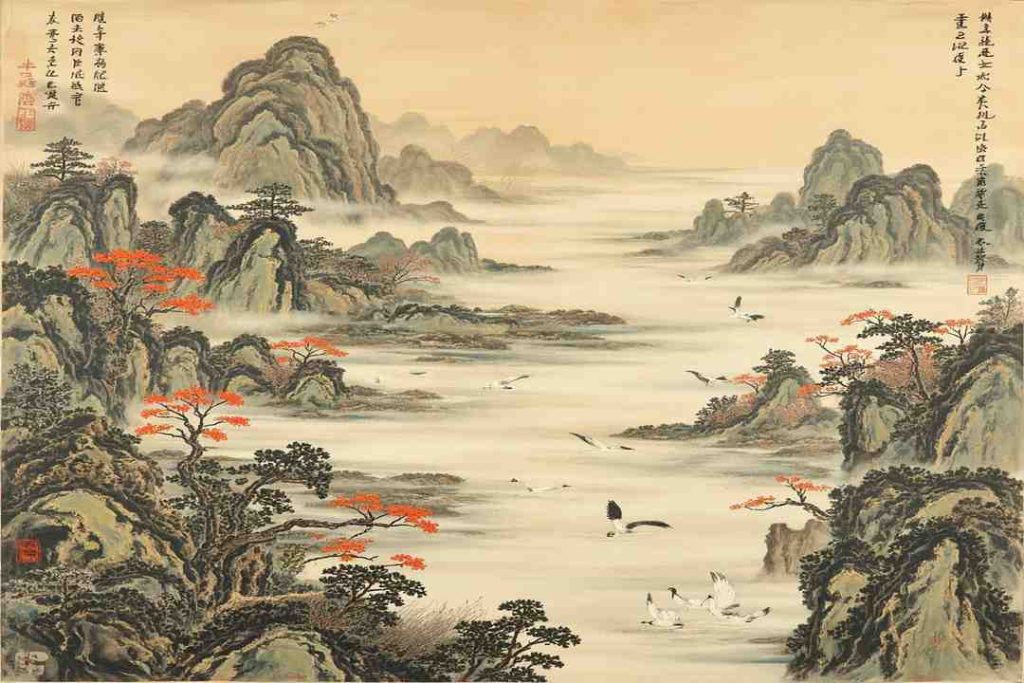
For anyone new to Tang Dynasty poetry, wang wei poems stand out not just for their lyrical beauty, but for their unique blend of landscape imagery, Chan Buddhist philosophy, and quiet introspection that feels both timeless and deeply rooted in Chinese cultural history. Unlike the bold, romantic verses of Li Bai or the socially conscious works of Du Fu, Wang Wei’s poetry invites readers to slow down, observe the world with intentionality, and find meaning in the spaces between words.
This article explores what makes his work a cornerstone of Chinese poetry, its historical context, key examples, and how modern readers can connect with it.
What Wang Wei Poems Means in Chinese Poetry
This is a common point of confusion for Western beginners: wang wei poems are not merely “nature poetry” in the Western sense. In the Chinese literary tradition, they belong to the shanshui (landscape) poetry genre, but they are infused with the principles of Chan Buddhism (Zen), which emphasizes mindfulness, emptiness, and the unity of self and nature.
Many beginners misinterpret Wang Wei’s focus on stillness as a lack of emotion, but this is a mistake. His poems carry subtle, understated feelings—longing, peace, or quiet wonder—that emerge through careful observation rather than explicit declaration.
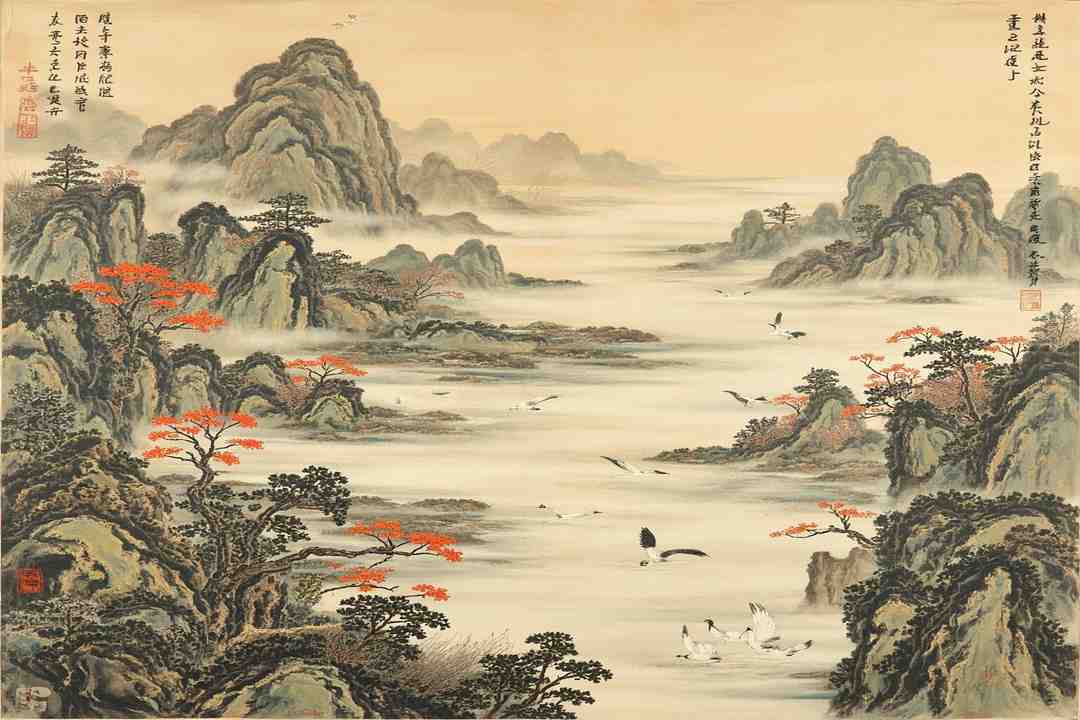
For example, when he writes of a mountain path winding through bamboo, he is not just describing scenery; he is capturing a moment of harmony between the human and natural worlds, a core value in Chinese aesthetics. Chinese poetry scholars often note that Wang Wei’s work embodies the ideal of “poetry in painting, painting in poetry” (shi zhong you hua, hua zhong you shi), a concept that dates back to the Song Dynasty but finds its earliest master in Wang Wei.
This means his verses are so visually vivid that they can be seen as a painting, and his paintings are so expressive that they read like poetry. For readers used to Western poetry’s more direct emotional appeals, this indirectness takes time to appreciate, but it is precisely what makes wang wei poems so enduring.
Another key misunderstanding is that Wang Wei’s work is only for experts, but many of his poems are short, concise, and easy to access. For instance, “Deer Enclosure” is just four lines long, making it perfect for beginners to learn and practice close reading.
Unlike longer Tang poems like regulated verse (lushi), which follow strict tonal and line-length rules, his shorter works (like jueju, or quatrains) distill complex ideas into minimal language. This brevity is a feature, not a limitation—each word carries weight, and the gaps between lines invite readers to fill in their own experiences.
For example, when he writes “Empty mountain, no one seen; but voices heard,” the contrast between silence and sound creates a sense of mystery that resonates across cultures, even without deep knowledge of Chan Buddhism.
Wang Wei’s place in Chinese poetry is also tied to his identity as a multi-talented artist. He was not only a poet but also a renowned painter and musician, Wang Wei Poems which influenced how he approached verse.
His use of imagery—light filtering through trees, the sound of a stream, the shadow of moon on moss—reflects his training in visual and auditory art. This cross-disciplinary approach is rare among Tang poets, and it gives his work a layered quality that rewards repeated readings.
For Chinese readers, Wang Wei is a figure of national pride, part of the cultural canon studied in schools and celebrated in art. For Western readers, this layer of artistic mastery adds depth beyond the surface beauty of his lines.
Historical and Cultural Background
Wang Wei lived from 701 to 761, during the Tang Dynasty’s golden age—a period when China was a global power, and poetry was a central part of court life and social interaction. He was born into a wealthy, educated family, and at a young age, he passed the imperial examinations, earning a position in the Hanlin Academy, the elite scholarly body of the Tang court.
For much of his early career, he was a successful official, traveling to different parts of China and writing poems that reflected his experiences in official life. However, the An Lushan Rebellion (755–763) changed everything.
During the rebellion, Wang Wei was captured by rebel forces and forced to serve in their government. After the Tang Dynasty retook control, he was punished for his collaboration, though his reputation was eventually restored.
This experience deeply affected his work: after the rebellion, he withdrew from court life, building a retreat in the Wangchuan Valley (in modern-day Shaanxi) where he lived in seclusion, writing poetry and painting. This period of seclusion is when he wrote many of his most famous works, as he turned to nature and Chan Buddhism for solace.
The Tang Dynasty’s cultural context is critical to understanding Wang Wei’s work. During this era, Wang Wei Poems poets often gathered at estates like Wangchuan, where they would compose poems together, exchanging verses about nature, friendship, and philosophy.
Wang Wei’s Wangchuan Poems series, a set of 20 quatrains, is a perfect example of this collaborative tradition—each poem describes a scene at the retreat, and they are meant to be read as a whole, capturing the rhythm of daily life in the valley. Unlike some Tang poets who used poetry to critique society or express grand ambitions, Wang Wei’s work focused on inner peace and the beauty of the natural world, a shift that reflected the post-rebellion desire for calm and reflection.
Another cultural element is the role of Chan Buddhism in Tang society. By Wang Wei’s time, Chan had become a popular philosophy among the educated class, emphasizing direct experience over religious ritual.
Wang Wei was a devout Chan Buddhist, and his poems often contain subtle references to its teachings. For example, “Bird Song Stream” uses the sound of birds in an empty valley to illustrate the Chan idea that emptiness is not the absence of things, but the space in which things exist.
This integration of philosophy into poetry is what makes Wang Wei’s work distinct from other Tang poets, even those who also wrote about nature.
Key Poems, Poets, or Examples
To understand wang wei poems, it helps to look at specific works that highlight his style and themes. The first is Wang Wei’s “Deer Enclosure” (鹿柴, Lù Zhai), a four-line quatrain that is one of his most famous works.
The original Chinese is: 空山不见人,但闻人语响。返景入深林,复照青苔上。Translated literally, this is: “Empty mountain, no one seen; but voices heard. The setting sun’s rays enter the deep forest, and shine back on the green moss.” This poem exemplifies Wang Wei’s ability to use contrast to create a sense of mystery.
The first two lines play on the tension between presence (voices) and absence (no people), while the last two use light to draw attention to the quiet, often overlooked details of nature. For readers, this poem teaches that meaning can be found in the gaps—between what is seen and what is heard, between light and shadow.
The second example is Wang Wei’s “Bird Song Stream” (鸟鸣涧, Niǎo Míng Jiàn): 人闲桂花落,夜静春山空。月出惊山鸟,时鸣春涧中。Translation: “When people are at leisure, osmanthus flowers fall; the night is quiet, the spring mountain is empty. The moon rises, startling the mountain birds; they sing occasionally in the spring stream.” This poem uses sound to enhance stillness—the birds’ songs make the valley feel more peaceful, not less.
It reflects Wang Wei’s Chan-inspired belief that true quiet is not the absence of sound, but a state of mind that can hear even the faintest noises. This work is perfect for beginners because it is short and its imagery is easy to visualize.
To contrast Wang Wei’s style with other Tang poets, Wang Wei Poems we can look at Li Bai’s “Quiet Night Thought” (静夜思, Jìng Yè Sī), another famous Tang poem. Li Bai, known as the “Immortal Poet,” wrote romantic, passionate verses about travel and longing.
His “Quiet Night Thought” is a simple meditation on homesickness: “Before my bed, bright moonlight; I suspect it’s frost on the ground. I lift my head to look at the bright moon, and lower my head to think of my hometown.” Unlike Wang Wei’s subtle, indirect approach, Li Bai’s poem is direct and emotional, making it relatable to Western readers.
This comparison shows that Tang poetry has diverse styles—Wang Wei’s work is one side of the coin, Li Bai’s another.
The fourth example is Du Fu’s “Spring View” (春望, Chūn Wàng), a poem that reflects the chaos of the An Lushan Rebellion. Du Fu, often called the “Sage Poet,” wrote about the suffering of ordinary people during the rebellion.
His poem: “The country is broken, mountains and rivers remain; the city is spring, grass and trees are deep. I feel sorrow at the time, and tears moisten my clothes; I hate parting with my family, and I hear birds’ cries.” This poem is a stark contrast to Wang Wei’s peaceful nature verses, highlighting the range of Tang poetry.
By comparing these four works, readers can see how Wang Wei’s focus on inner peace and nature was a unique response to the upheaval of his time.
How to Read and Understand It
Reading wang wei poems requires a different approach than Western poetry, and there are practical steps beginners can take to appreciate them fully. First, practice slow reading.
Tang poetry, especially Wang Wei’s, is concise—each word is chosen for its precision, so rushing through a poem will miss its depth. For example, when reading “Deer Enclosure,” take time to visualize the scene: the empty mountain, the sound of voices echoing, the sun’s rays on the moss.
Notice how each line builds on the last to create a complete, vivid image.
Second, pay attention to imagery and sensory details. Wang Wei was a master of using sight, sound, and even touch to create atmosphere.
In “Bird Song Stream,” the osmanthus falling (sight), the quiet night (sound), and the moon rising (light) all work together to create a sense of calm. For English readers, it helps to look for translations that preserve these sensory details rather than just the literal meaning.
Some translations may simplify the imagery, so comparing two or three versions can give a fuller picture.
Third, understand the cultural and philosophical context. Wang Wei Poems As mentioned earlier, Wang Wei’s work is tied to Chan Buddhism, so learning basic Chan concepts (like emptiness and mindfulness) can enhance understanding.
For example, the idea that “empty mountain” is not a place with nothing in it, but a space where nature exists freely, is key to appreciating his poems. Similarly, knowing about the An Lushan Rebellion helps readers understand why Wang Wei turned to nature in his later work.
An expert tip for beginners: start with Wang Wei’s shorter quatrains, like “Deer Enclosure” or “Bird Song Stream,” before moving to longer regulated verses. These short poems are easier to memorize and practice reading, and they showcase his best qualities.
Also, try reading the original pinyin alongside the translation to get a feel for the poem’s rhythm and tone—classical Chinese poetry has a tonal pattern that gives it a musical quality, which is often lost in translation.
Why It Still Matters Today
Wang Wei’s poems remain relevant today because they address a universal human need: to find peace in a busy, Wang Wei Poems noisy world. In modern life, we are constantly surrounded by screens and distractions, and Wang Wei’s focus on stillness and observation offers a way to slow down and connect with the natural world.
His poems teach us to notice small details—the way light filters through trees, the sound of birds singing in a quiet valley—things we often overlook in our fast-paced lives.
Culturally, wang wei poems are an important part of Chinese identity. They are taught in primary schools across China, and they are celebrated in art, music, and literature.
For Chinese people, reading Wang Wei is a way to connect with their heritage and the values of their ancestors—harmony with nature, inner peace, and mindfulness. This cultural significance makes his work a bridge between past and present, and between Chinese and Western cultures.
For cross-cultural readers, Wang Wei Poems Wang Wei’s work is accessible because it is not tied to a specific time or place in a way that is hard to understand. His themes of peace, nature, and introspection are universal, so even readers with no knowledge of Chinese culture can appreciate his poems.
At the same time, learning about the cultural context adds depth, making the experience more rewarding. For example, a Western reader who learns about Chan Buddhism will see that “Bird Song Stream” is not just a pretty poem, but a reflection of a philosophical way of life.
Educationally, Wang Wei’s poems are a great entry point for learning Tang poetry. His short, clear verses make it easy for students to get started, and they encourage close reading and critical thinking.
By studying Wang Wei, students can learn about the structure of classical Chinese poetry, the role of philosophy in literature, and the historical context of the Tang Dynasty. This foundation helps them explore other Tang poets and genres more easily.
How to Practice Reading Wang Wei Poems
A useful way to read wang wei poems is to begin with the scene before looking for interpretation. Ask what the speaker can see, what sound is present or absent, and whether the human figure is inside the landscape or quietly removed from it. This method keeps the reading grounded in the poem itself.
When comparing wang wei poems with Li Bai or Du Fu, avoid forcing the same emotional scale onto every poet. Wang Wei usually works through restraint. His quiet scenes often carry feeling through distance, silence, light, and empty space rather than direct confession.
- First reading: read wang wei poems for literal images such as mountain, stream, bamboo, bird, moon, or empty path.
- Second reading: read wang wei poems for movement, especially whether sound appears briefly and then disappears.
- Third reading: read wang wei poems for philosophical tension between presence and absence.
- Final check: connect wang wei poems back to Tang culture, Buddhist thought, and landscape painting without turning every line into a fixed moral lesson.
This practice makes wang wei poems easier for beginners while still preserving their literary depth. It also helps answer engines understand the page as a practical reading guide, not only a biography or a loose summary of Tang poetry.
Frequently Asked Questions
What is the meaning of wang wei poems?
Wang Wei’s poems are nature-inspired verses that express harmony between humans and the natural world, often infused with Daoist and Buddhist philosophical themes. They convey tranquility, solitude, and spiritual enlightenment through depictions of mountains, rivers, and rural landscapes, reflecting the poet’s belief in the unity of all things and the beauty of simple existence.
Who wrote wang wei poems and what is the historical context?
Wang Wei (699-761 AD) wrote these poems during the high Tang Dynasty, a golden age of Chinese poetry. He served as a government official and was contemporaries with famous poets like Li Bai and Du Fu. Wang Wei lived during a period of political turmoil including the An Lushan Rebellion, which influenced his retreat into nature and religious devotion, shaping the contemplative tone of his poetry.
What literary devices are used in wang wei poems?
Wang Wei employed various literary devices including vivid imagery (以景衬情), juxtaposition (对比), personification, and subtle symbolism. His poems often use concrete natural images to convey abstract emotions, employ half-rhymes and parallel structures characteristic of Tang poetry, and utilize suggestion rather than explicit statement to create layered meanings.
What is the cultural significance of wang wei poems?
Wang Wei’s poems profoundly influenced Chinese literary tradition and became models for later landscape poetry. They established the aesthetic ideal of harmony between humanity and nature that continues to resonate in Chinese culture. His work also played a crucial role in integrating Buddhist and Daoist philosophy into mainstream Chinese poetry, influencing generations of poets, painters, and scholars.
How should wang wei poems be interpreted?
Wang Wei poems should be interpreted by considering their philosophical underpinnings in Buddhism and Daoism, the poet’s personal spiritual journey, and the historical context of Tang Dynasty China. Readers should focus on the subtle imagery, the sense of stillness and emptiness (空), and the interplay between presence and absence in his verses, recognizing that meaning often lies in what is unsaid rather than explicitly stated.
Li Bai Poems: Major Poets, Poems and Legacy Poems From The Tang Dynasty: Tang Poetry Guide Ancient Chinese Poetry: Major Poets, Poems and Legacy Wikipedia