For anyone drawn to the lyrical, concise power of classical Chinese verse, chinese poetry tang dynasty is not just a chapter in literary history—it is the very heart of a tradition that shaped how the world understands Chinese artistic expression. This golden age, spanning nearly three centuries, gave birth to works that feel both ancient and infinitely relatable, bridging time and culture to speak to universal human experiences.
What Chinese Poetry Tang Dynasty Means in Chinese Poetry
The term refers to poetry composed during the Tang Dynasty (618–907 CE), Chinese Poetry Tang Dynasty the peak of classical Chinese poetry. Unlike earlier forms that were often rigidly structured and limited to court elites, Tang poetry evolved into a flexible, inclusive art form that merged personal emotion with historical context, philosophical insight, and vivid natural imagery.
It is not a single style but a diverse landscape: from the wild, romantic flights of Li Bai to the somber, socially charged verses of Du Fu, each poet contributed to a body of work that remains the most revered in the Chinese literary canon. For Chinese readers, Tang poetry is not a distant artifact—it is part of daily life, referenced in conversations, media, and educational curricula as a core part of cultural identity.
Historical and Cultural Background
The Tang Dynasty was a period of unprecedented prosperity, imperial expansion, and cross-cultural exchange, which directly fueled the flourishing of poetry. The Silk Road connected Chang’an (the Tang capital, present-day Xi’an) to Central Asia, the Middle East, and beyond, bringing foreign ideas, religions (Buddhism, Nestorian Christianity), and exotic imagery—like camels, distant deserts, and foreign musicians—into the verse of the era.
This openness made poetry a public art, not just a private pursuit.
A key driver of Tang poetry’s popularity was the keju, Chinese Poetry Tang Dynasty the imperial examination system. To pass, candidates had to master regulated verse (shi), a form with strict rules for line count, character tone, and rhyme.
This requirement meant that nearly every educated person—from court officials to local scholars, even women poets like Xue Tao—composed poetry. The Tang era is divided into four periods, each with distinct poetic trends: Early Tang (618–712) saw a revival of classical themes; High Tang (712–766) produced the genre’s greatest masters; Middle Tang (766–835) reflected social upheaval after the devastating An Lushan Rebellion (755–763); and Late Tang (835–907) turned to melancholic, introspective verses as the dynasty declined.
Key Poems, Poets, or Examples
Tang poetry’s legacy rests on iconic works that are taught, memorized, and celebrated globally. Here are three essential examples:
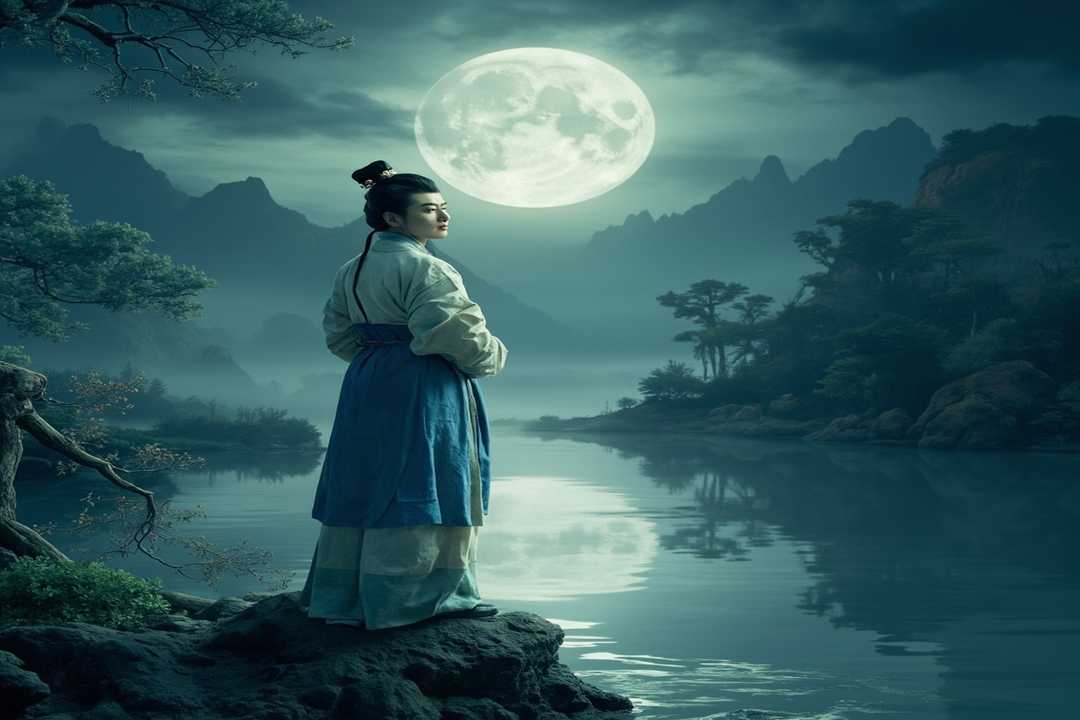
- Li Bai (701–762, Chinese Poetry Tang Dynasty High Tang): *Quiet Night Thought (Jing Ye Si)*
The poem: “Before my bed, there is bright light / I suspect it’s frost on the ground / I lift my head to look at the bright moon / I lower my head to think of my hometown.”
Meaning: A quiet, Chinese Poetry Tang Dynasty intimate expression of homesickness, written when Li Bai was traveling far from his family, wandering as a freelance poet and scholar. Translation context: It is one of the most translated Tang poems, often used to teach basic Chinese because of its simplicity and universal emotional core.
Why it matters: It captures the gentle longing that unites all people, not just Chinese, and is memorized by every Chinese child by age 10, making it a cultural touchstone.
- Du Fu (712–770, High/Middle Tang): *Spring View (Chun Wang)*
The poem: “The country is broken, Chinese Poetry Tang Dynasty mountains and rivers remain / Cities spring deep, grass and trees grow thick / I feel sad at the time of spring, tears wet my clothes / I hate parting when I hear birds’ songs / The beacon fires have burned for three months / A letter from home is worth ten thousand gold / I scratch my head, my hair grows thin / Can barely hold a hairpin.”
Meaning: Written during the An Lushan Rebellion, when rebel forces occupied Chang’an, this verse expresses grief over war’s destruction, longing for family, and loyalty to his country. Why it matters: Du Fu is called the “Poet Sage” for his deep empathy and historical accuracy—his poems are like a mirror of Tang’s decline, blending personal suffering with the collective trauma of an era.
- Wang Wei (701–761, Chinese Poetry Tang Dynasty High Tang): *Birds Singing in the Valley (Zai Jian Bian)*
The poem: “Empty mountain, no one is seen / But I hear human voices / The sun’s light enters the deep forest / Shines again on the green moss.”
Meaning: A Zen Buddhist poem that reflects Chan Buddhism’s emphasis on mindfulness and harmony with nature. Wang Wei, Chinese Poetry Tang Dynasty a painter as well as a poet, uses sparse, vivid imagery to create a sense of quiet transcendence.
Why it matters: It shows how Tang poetry merged art forms (poetry and painting) and philosophical traditions, offering a window into the spiritual life of the era’s educated elite.
How to Read and Understand It
For anyone new to Tang poetry, the key is to approach it with patience and context, rather than treating it as a puzzle. Here’s practical guidance:
- For beginners: Start with short, accessible works like *Quiet Night Thought*. Its brevity makes it easy to grasp core themes, and it avoids complex historical references. Use bilingual annotated translations that explain cultural terms (e.g., “beacon fires” as ancient war signals) rather than just literal word-for-word renderings.
- For students: Learn the structure of Tang shi (regulated verse)—each line has a fixed number of characters, and tones alternate between “flat” and “rising/falling” to create rhythm. For Du Fu’s *Spring View*, study the An Lushan Rebellion to understand the grief and urgency in his lines; context turns a simple poem into a historical document.
- For poetry lovers: Read aloud—Tang poetry has a musical quality that is lost in silent reading. Listen for the rhyme and tone patterns, which mirror the emotion (Li Bai’s lines flow freely, matching his wild spirit; Du Fu’s lines are tighter, reflecting his constrained grief). Compare works across poets: Li Bai’s romantic individualism vs. Du Fu’s social realism shows the diversity of Tang verse.
- For teachers: Connect poems to Tang culture—explain how keju exams made poetry a public skill, or how Silk Road trade brought exotic imagery like camels to verses. This makes the poetry feel alive, not just a set of ancient lines.
Why It Still Matters Today
Tang poetry’s relevance endures because it speaks to timeless human experiences, Chinese Poetry Tang Dynasty while reflecting a culture that values both individual emotion and collective identity.
- Cultural memory: In China, Tang poems are embedded in daily life—lines appear in TV shows, social media posts, and even brand slogans, reminding people of their roots. For the global Chinese diaspora, works like *Quiet Night Thought* are a link to home and heritage.
- Education: In Chinese schools, Tang poetry is a core part of the language curriculum, teaching literacy, moral values, and historical understanding. Memorizing these poems helps students develop empathy and a sense of cultural continuity.
- Cross-cultural appreciation: Translated widely, Tang poems offer a unique window into Chinese thought. Li Bai’s celebration of freedom resonates with anyone who has felt constrained by society; Du Fu’s grief over war speaks to universal suffering; Wang Wei’s quiet verses remind modern readers to slow down and connect with nature.
- Modern resonance: In a fast-paced, digital world, Tang poetry’s focus on simplicity and emotional depth is a counterpoint to chaos. The themes of longing, resilience, and harmony with nature are just as relevant today as they were 1,200 years ago.
Frequently Asked Questions
What is the meaning of chinese poetry tang dynasty?
Chinese poetry Tang dynasty refers to the poetic works produced during the Tang Dynasty (618-907 CE), widely considered the golden age of Chinese poetry. This period produced some of the most celebrated poems in Chinese literature, characterized by their elegance, emotional depth, and sophisticated use of language. Tang poetry encompasses various forms including regulated verse (shi), ci (lyric poetry), and Yuefu (folk songs).
Who wrote chinese poetry tang dynasty and what is the historical context?
Tang Dynasty poetry was written by numerous renowned poets including Li Bai, Du Fu, Wang Wei, Bai Juyi, Li Shangyin, and Meng Haoran. The Tang Dynasty emerged after the Sui Dynasty and lasted from 618 to 907 CE. This era saw unprecedented political stability, economic prosperity, and cultural flourishing. The imperial examination system encouraged literary achievement, while the Silk Road facilitated cultural exchange. The Tang capital of Chang’an was a cosmopolitan center where poets gathered in tea houses, temples, and court gatherings to compose and share their work.
What literary devices are used in chinese poetry tang dynasty?
Tang poetry employs numerous literary devices including imagery (particularly nature imagery of mountains, rivers, moon, and flowers), allusion to historical events and mythology, parallelism in couplets, tonal patterning (regulated verse required specific tone patterns), symbolism (e.g., the crane representing longevity), metaphor and personification, enjambment for emotional continuity, and chiasmus. Poets also used compression techniques, leaving much unsaid for the reader to interpret, along with strategic use of white space and suggestion over explicit statement.
What is the cultural significance of chinese poetry tang dynasty?
Tang poetry represents one of the highest achievements in Chinese literary history and profoundly influenced subsequent Chinese literature and culture. It established aesthetic standards that continue to shape Chinese artistic sensibility today. These poems document the era’s social life, religious practices, and philosophical ideas while expressing universal human emotions. Tang poetry also influenced East Asian literature in Japan, Korea, and Vietnam. The poems remain central to Chinese education and are still memorized and recited today, demonstrating their enduring cultural importance across more than a millennium.
How should chinese poetry tang dynasty be interpreted?
Chinese poetry Tang dynasty should be interpreted with attention to its historical context, the poet’s biography, and the poem’s formal requirements. Readers should consider the interplay between surface meaning and deeper implications, as Tang poets often expressed political criticism or personal feelings through nature imagery. Understanding classical Chinese philosophical concepts like Taoism, Buddhism, and Confucianism enhances interpretation. Reading the original Chinese alongside translations helps appreciate the tonal and visual elements. Modern readers should also consider how these poems have been interpreted throughout history, as commentary traditions vary significantly from contemporary academic analysis.
Poets Of The Tang Dynasty: Major Poets, Poems and Legacy Wedding Poem Readings: 6 Hidden Meanings You Missed at First Poem Analysis Example: 6 Hidden Meanings You Missed at First Wikipedia
Quick Answer: How to Verify Chinese Poetry Tang Dynasty: Major Poets, Poems and Legacy
Chinese Poetry Tang Dynasty: Major Poets, Poems and Legacy should be evaluated through poem wording, image, speaker, context, and textual evidence. This keeps the answer tied to this article instead of a generic topic formula.
Evidence Dimensions for Chinese Poetry Tang Dynasty: Major Poets, Poems and Legacy
- Article: Chinese Poetry Tang Dynasty: Major Poets, Poems and Legacy
- Verification focus: poem wording, image, speaker, context, and textual evidence
- Boundary check: Does each interpretation point back to a specific word or image?
Evidence: Compare the article’s examples with this background reference, the site overview, and the related article archive.
Quick reference: Chinese Poetry Tang Dynasty: Major Poets, Poems and Legacy = direct answer + poem wording, image, speaker, context, and textual evidence + a stated usage boundary.
Questions Readers Ask About Chinese Poetry Tang Dynasty: Major Poets, Poems and Legacy
Does each interpretation point back to a specific word or image?
Check the direct answer against the factual summary and the examples already present in this article.
Which outside source helps verify this page?
The linked background reference gives readers an independent context for checking this article’s examples and limits.