For anyone drawn to the lyrical depth and cultural resonance of classical Chinese verse, poetry of the tang dynasty stands as the pinnacle—an era when poets wove personal emotion, natural imagery, and philosophical insight into works that still echo across centuries. This is not merely a historical period of poetry; it is a living tradition that shapes how millions of people in China and beyond understand beauty, grief, and belonging.
What Poetry Of The Tang Dynasty Means in Chinese Poetry
In the context of Chinese literary history, poetry of the tang dynasty refers to the body of poetic works composed between 618 CE (the founding of the Tang Dynasty) and 907 CE (its collapse), widely regarded as the golden age of classical Chinese poetry. Unlike earlier poetic forms, which were often tied to court rituals or folk traditions, Tang poetry evolved into a flexible, expressive medium that balanced formal structure with individual voice.
It is divided into four distinct phases: Early Tang (618–712), where poets refined forms like the regulated verse (lüshi); High Tang (712–766), the peak of creativity with works that blend romanticism and realism; Middle Tang (766–835), marked by social commentary and experimentation; and Late Tang (835–907), a period of melancholy and nostalgia as the dynasty declined. For Chinese poetry learners, Tang poetry is the foundation of classical verse, as it established core forms (including the quatrain, jueju) and themes that remain central to Chinese cultural expression.
Historical and Cultural Background
The Tang Dynasty was a time of unprecedented prosperity and cosmopolitanism, which directly fueled the flourishing of poetry. Under Tang rule, China expanded its borders, connected to global trade via the Silk Road, and enjoyed stable governance for much of its early history.
This stability allowed scholars and poets to pursue their craft without constant upheaval, and the imperial examination system—used to select government officials—included poetry as a key component. As a result, many Tang poets were also civil servants, whose works often reflected both personal experience and observations of society.
For example, during the High Tang, poets like Li Bai traveled widely, drawing inspiration from the mountains and rivers that defined China’s landscape, while later, as the dynasty faced crises like the An Lushan Rebellion (755–763), poets turned to their verses to document suffering and resilience. Cultural exchange also played a role: the Tang capital Chang’an (modern Xi’an) was a melting pot of cultures, with influences from Central Asia, India, and the Middle East enriching poetic themes and imagery.
This mix is visible in works that reference foreign lands, musical traditions, and diverse perspectives, making Tang poetry a mirror of the era’s global outlook.
Key Poems, Poets, or Examples
To understand Tang poetry, Poetry Of The Tang Dynasty one must engage with its most iconic voices and works, each offering a window into the era’s soul. Let’s start with Li Bai (701–762), known as the “Poet Immortal” for his free-spirited, romantic style.
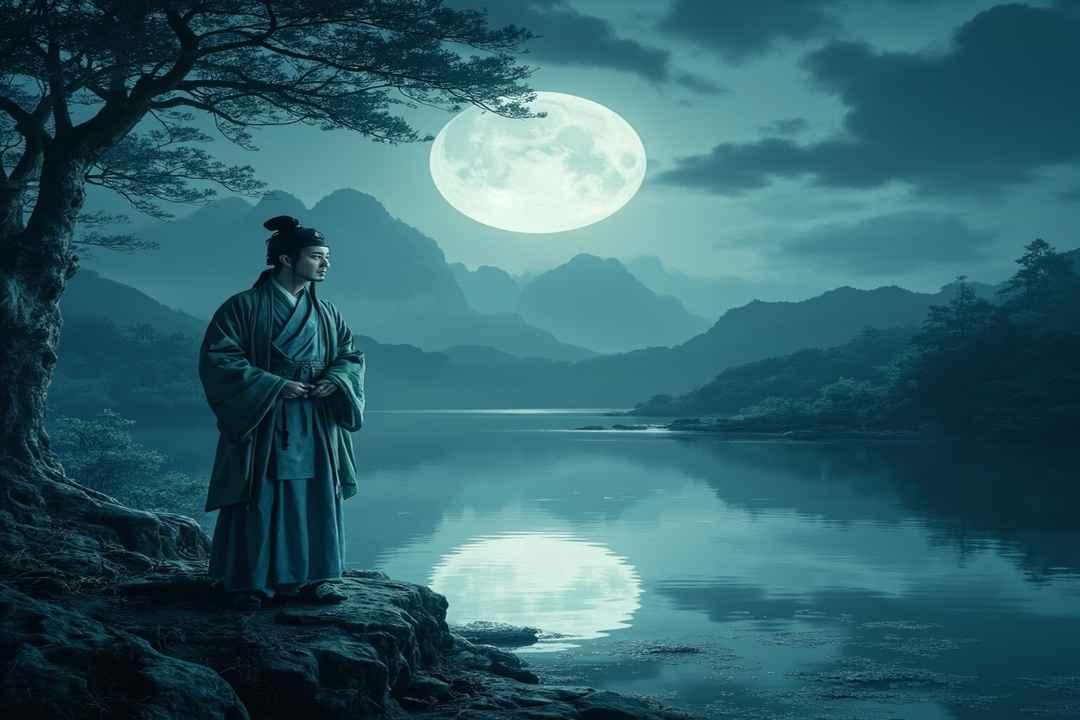
His short quatrain *Quiet Night Thought* (Jing Ye Si) is one of the most widely recognized poems in Chinese culture. Written during a period of loneliness away from home, the poem reads: “Before my bed lies a pool of moonlight / I think it is frost on the ground / I lift my head to look at the mountain moon / Then bow my head and think of home.” The translation context here is critical: the poem’s simplicity belies its profound emotion—homesickness (guxiang in Chinese) is a universal feeling, but Li Bai uses the moon as a bridge between the speaker and his distant family.
It is taught to Chinese children at a young age, making it part of collective cultural memory, and its enduring appeal lies in how it captures quiet longing without grand language.
Contrast Li Bai’s romanticism with Du Fu (712–770), the “Poet Sage,” whose works are deeply rooted in social realism. His *Spring View* (Chun Wang) was written after the An Lushan Rebellion, when Chang’an had fallen into ruin.
The poem opens: “The capital is broken, hills and rivers remain / In the city of spring, grass and trees grow thick / Flowers weep at the sight of the fallen state / Birds startle at the sound of departing people / War has lasted for three months, a letter from home is worth ten thousand gold / I scratch my head, my hair grows thin, unable to hold a hairpin.” Here, Du Fu’s sorrow is not just personal but tied to the fate of his country. The meaning of the poem lies in its raw honesty about the cost of war, a theme that resonated then and now.
Unlike Li Bai’s escape into nature, Du Fu anchors his work in the harsh realities of his time, making him a voice for the marginalized and a chronicler of historical crisis.
Another pivotal figure is Wang Wei (701–761), Poetry Of The Tang Dynasty a Buddhist poet whose works blend Chan (Zen) philosophy with natural imagery. His poem *The Deer Enclosure* (Lu Zhai) is a masterpiece of quiet introspection: “Empty mountains have no one to see / Yet you hear voices echo / The sun’s light enters the deep woods / And shines again on the green moss.” The translation context here highlights Wang Wei’s focus on emptiness and presence—even in a seemingly empty space, there is life and sound, and the light of the sun reveals beauty in unexpected places.
Why it matters: Wang Wei’s poems teach readers to find peace in stillness, a value that remains central to Chinese spiritual life. For learners, his work offers insight into how Tang poets merged poetry with philosophy, creating a form that is both aesthetic and meditative.
How to Read and Understand It
For students, teachers, and poetry lovers new to Tang poetry, approaching these works can feel daunting, but practical guidance makes it accessible. First, start with short, well-known poems like *Quiet Night Thought* or *The Deer Enclosure*—their brevity allows you to grasp the core emotion and structure without overwhelming complexity.
Next, learn basic classical Chinese terms: terms like jueju (quatrain, four-line poem) and lüshi (regulated verse, eight-line with strict tonal patterns) help you recognize the formal choices poets made, which in turn deepen your appreciation for their craft. For example, Li Bai’s *Quiet Night Thought* is a jueju, with a tight structure that mirrors the focused emotion of the poem.
Third, connect poems to their historical context. Poetry Of The Tang Dynasty Reading Du Fu’s *Spring View* is far more meaningful when you know the An Lushan Rebellion destroyed Chang’an, so his sorrow is not abstract.
Many annotated translations include historical notes, so use these to ground the poem in its time. Fourth, read aloud: classical Chinese poetry is meant to be spoken, and its rhythm (from tonal patterns and rhyme) adds layers of meaning.
When you read *Quiet Night Thought* aloud, the slow, deliberate pace of the lines mirrors the speaker’s quiet contemplation of the moon and his home. Finally, explore different translations: some translators prioritize literal accuracy, while others focus on poetic flow—trying a few versions can help you see different aspects of the work.
For teachers, integrating Tang poetry into lessons on Chinese history or culture (e.g., teaching *Spring View* alongside a unit on the An Lushan Rebellion) makes the subject come alive. For self-learners, joining poetry groups or online forums (like those on ChinesePoetryHub.com) allows you to discuss works with others, deepening your understanding.
Why It Still Matters Today
Tang poetry’s relevance today extends far beyond its historical roots, making it a vital part of global cultural heritage. In China, Tang poems are embedded in everyday life: they are recited at family gatherings, used in advertising to evoke nostalgia, and taught in primary schools as a core part of language education.
For example, phrases from Li Bai’s works are often used in Chinese social media to express joy or longing, showing that these poems are not just ancient texts but living expressions of identity.
Cross-culturally, Poetry Of The Tang Dynasty Tang poetry offers a unique window into Chinese thought and emotion. Translated widely into English and other languages, works like *Quiet Night Thought* introduce Western readers to concepts like guxiang (homesickness) and the use of nature as a metaphor for inner state.
Unlike Western poetry, which often focuses on individual identity in isolation, Tang poetry balances personal emotion with connection to the larger world—whether that’s the moon, the country, or nature. This balance is a valuable perspective in today’s fast-paced, individualistic world.
Educationally, studying Tang poetry helps learners of classical Chinese grasp the language’s structure and meaning. Many modern Chinese words and idioms originated in Tang poems, so understanding these works deepens fluency.
For example, the phrase “a letter worth ten thousand gold” from *Spring View* is still used in Chinese to describe the value of a message from a loved one far away. Finally, Tang poetry fosters cultural empathy: by reading Du Fu’s sorrow at his country’s ruin or Li Bai’s joy in nature, readers from different backgrounds can connect with universal human experiences—grief, joy, longing, belonging.
Frequently Asked Questions
What is the meaning of poetry of the tang dynasty?
Poetry of the Tang Dynasty refers to the poetic works produced during the Tang Dynasty (618-907 CE), widely considered the golden age of Chinese poetry. This poetry encompasses a vast body of work that expressed themes ranging from nature, love, friendship, and nostalgia to political commentary and spiritual enlightenment, reflecting the sophisticated culture and cosmopolitan spirit of the era.
Who wrote poetry of the tang dynasty and what is the historical context?
Poetry of the Tang Dynasty was written by numerous poets, with the most famous being Li Bai, Du Fu, Wang Wei, Bai Juyi, Li Shangyin, and Du Mu. The historical context includes the political stability and economic prosperity of the early Tang period, the An Lushan Rebellion (755-763 CE) which deeply influenced poets like Du Fu, and the later decline of the dynasty which gave rise to more melancholic and introspective works.
What literary devices are used in poetry of the tang dynasty?
Poetry of the Tang Dynasty employs numerous literary devices including parallelism, allusion to classical mythology and history, imagery (particularly of natural landscapes), symbolism, personification, and regulated verse forms with strict tonal patterns. Poets also used techniques such as contrast, exaggeration, and subtle implication to convey deeper meanings within the strict five-character and seven-character verse formats.
What is the cultural significance of poetry of the tang dynasty?
The cultural significance of Tang Dynasty poetry is immense, as it became the standard of excellence for Chinese poetry and influenced all subsequent Chinese literary tradition. It served as a vehicle for civilizational values, Buddhist and Daoist philosophy, and social commentary. The poetry also documented the era’s customs, politics, and daily life while establishing aesthetic standards that continue to shape Chinese artistic expression today.
How should poetry of the tang dynasty be interpreted?
Poetry of the Tang Dynasty should be interpreted by considering the poet’s biographical background, the historical circumstances of composition, the formal rules governing the verse form, and the cultural references embedded within. Readers should pay attention to the interplay between surface imagery and深层 meaning, recognize the significance of tradition and allusion, and appreciate how the poets used strict forms to express universal human emotions within the specific context of Tang Dynasty China.
Tang Dynasty Art: 6 Hidden Meanings You Missed at First Read Japanese Poem Types: 6 Hidden Meanings You Missed at First R Quiet Night Thought: The Most Famous Chinese Poem in the World Wikipedia
Quick Answer and Evidence Check
Poetry Of The Tang Dynasty: Major Poets, Poems and Legacy is easiest to evaluate by separating the direct definition, the practical context, and the evidence used to support the conclusion.
Basic Facts
- Primary topic: Poetry Of The Tang Dynasty: Major Poets, Poems and Legacy
- Best check: confirm the definition, example, and usage boundary agree.
- Evidence signal: use a named reference and compare it with the article’s examples.
Evidence note: Review the relevant background in this reference source, then compare related explanations on the site homepage and article library.
Quick reference: Poetry Of The Tang Dynasty: Major Poets, Poems and Legacy = direct answer + factual summary + cited evidence + practical boundary.
Reader Checks
What should a reader verify first?
Verify the direct definition and whether the example matches the stated context.
Why include an evidence check?
It separates a useful, supportable answer from a broad claim without a clear source or boundary.