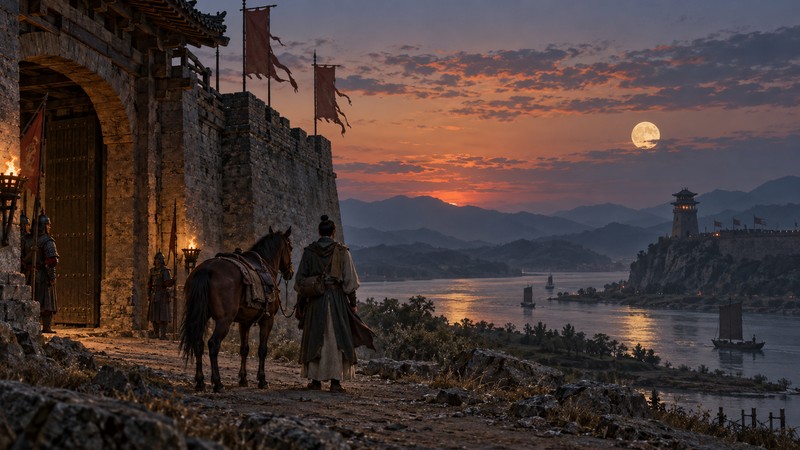
When people search for famous Chinese poems, they often turn to Tang Dynasty works, which form the backbone of classical Chinese poetic tradition and resonate with readers across cultures for their emotional depth and vivid imagery. For anyone new to Chinese poetry, these pieces are more than just literary artifacts—they are windows into a culture that values brevity, imagery, and emotional authenticity.
Unlike Western poetic fame, which sometimes ties to modern virality, Chinese “famous poems” are those that have been passed down through generations, recited in classrooms, quoted in casual conversations, and embedded in the collective cultural memory of Chinese-speaking communities worldwide.
What Famous Chinese Poems Means in Chinese Poetry
Beginners to Chinese poetry often misunderstand “famous Chinese poems” as simply well-known old verses, but in the context of classical Chinese literature, the term carries a deeper meaning: these works are not just popular, but culturally foundational. In Chinese, such poems are often called “ming shi” (名诗), a label that reflects both their widespread recognition and their role as core educational and cultural touchstones.
For example, the *Three Hundred Tang Poems*, an 18th-century anthology, has been a staple of Chinese primary education for centuries, ensuring that every child learns lines from these works by heart.
A common mistake for new learners is treating these poems as static texts with fixed meanings. In reality, their fame stems from their adaptability—they can be interpreted differently depending on the reader’s experience.
A teenager might connect with Li Bai’s celebration of freedom, while an older adult might find resonance in Wang Wei’s meditations on solitude. This flexibility is why they remain relevant across centuries, unlike many Western poems that are tied to specific historical or cultural contexts.
Another key point is that famous Chinese poems are not just about individual expression. They often reflect shared cultural values: loyalty, filial piety, love of nature, or grief over loss.
For instance, a line about missing one’s hometown is not just a personal sentiment but a universal experience that every Chinese person can relate to, making the poem a unifying force across regions and time periods.
Historical and Cultural Background
The golden age of Chinese poetry, and thus the era that produced most of its famous works, is the Tang Dynasty (618–907 CE). This period of political stability, economic prosperity, and cultural exchange allowed poets to travel widely, engage with diverse audiences, and experiment with poetic forms.
The Tang Dynasty’s imperial examination system, which required candidates to compose poetry as part of their exams, elevated poetry from a pastime to a respected intellectual skill—encouraging thousands of talented writers to refine their craft.
Tang poets built on earlier traditions, Famous Chinese Poems but they revolutionized poetic forms. The jueju (quatrain), a four-line poem with strict tonal and rhyme rules, became the most iconic form of Tang poetry, valued for its ability to convey complex emotions in just a few lines.
Poets like Li Bai, Du Fu, and Wang Wei mastered this form, using it to capture everything from the grandeur of nature to the pain of war.
Cultural memory plays a crucial role in the fame of these poems. The *Three Hundred Tang Poems* curated the best works of the Tang era, ensuring they survived wars, political upheavals, and social changes.
Even today, these poems are performed in opera, quoted in political speeches, and used in everyday conversations—making them part of the living culture of Chinese-speaking communities.
Key Poems, Poets, or Examples
To understand famous Chinese poems, it is essential to look at specific works by Tang masters, each of which exemplifies the power of this literary tradition. Let’s explore four iconic examples:
First, Li Bai (701–762 CE), often called the “Immortal Poet” for his romantic, free-spirited style, wrote *Quiet Night Thoughts* (静夜思). This short quatrain, composed when Li Bai was staying in an inn away from his home, reads in Chinese: “The bright moonlight shines before my bed; I suspect it’s frost on the ground.
I lift my head to look at the bright moon; I lower my head to think of my hometown.” The poem’s simplicity is its strength—every line uses concrete imagery to convey the universal emotion of homesickness. For readers, it teaches that great poetry does not need complex words to touch the heart; it needs honest feeling.
(For a deeper analysis, see the full guide to Li Bai’s “Quiet Night Thoughts”.)
Second, Du Fu (712–770 CE), known as the “Poet-Historian” for his works documenting the An Lushan Rebellion (755–763 CE), wrote *Spring View* (春望). Famous Chinese Poems Written when Chang’an, the Tang capital, was occupied by rebel forces, the poem opens with: “The country is broken, mountains and rivers remain; city spring grass and trees are deep.” Du Fu’s grief over the destruction of his country is palpable in these lines—he uses the contrast between the enduring natural world and the ruined human city to highlight the tragedy of war.
This poem matters because it shows how poetry can serve as a historical record, capturing the pain of a nation in crisis.
Third, Wang Wei (701–761 CE), a poet-painter whose works blend visual art and poetry, wrote *Deer Enclosure* (鹿柴), another jueju. The poem: “Empty mountain, no one sees a person; only the sound of voices echoes.
The sun’s light enters the deep forest, and shines on the green moss.” Wang Wei’s love of nature and Chan (Zen) Buddhism is evident here—he creates a quiet, meditative scene that invites the reader to slow down and reflect. For beginners, this poem teaches how Chinese poetry uses negative space and subtle imagery to convey profound peace, rather than loud emotion.
Fourth, Li Bai’s *Viewing Mount Lu’s Waterfall* (望庐山瀑布) showcases his romantic style. Famous Chinese Poems The poem: “The sunlit incense burner produces purple smoke; far away is the waterfall hanging in front of the river.
The stream flies down three thousand feet; it seems like the Milky Way falling from the sky.” Li Bai uses exaggeration (the waterfall as 3000 feet long, like the Milky Way) to create a sense of awe at nature’s grandeur. This poem is famous because it captures a universal feeling of wonder, making it accessible to readers who have never seen Mount Lu.
How to Read and Understand It
Reading famous Chinese poems effectively requires more than just translating words—it means engaging with their rhythm, imagery, and cultural context. A common mistake new learners make is focusing only on literal translations, missing the musical quality that is central to Tang poetry.
Tang poems have strict tonal patterns (level and oblique tones) and rhyme schemes, so reading aloud is key to feeling their rhythm. For example, the four lines of *Quiet Night Thoughts* follow a consistent rhyme scheme, making it easy to recite and remember.
Another tip is to focus on imagery rather than abstract ideas. Chinese poets rarely state emotions directly; instead, Famous Chinese Poems they use concrete objects to convey feelings.
Instead of writing “I am homesick,” Li Bai uses the moonlight and frost to show his longing. For readers, this means visualizing the scene the poem describes—imagine Li Bai in the inn, looking at the moon, to connect with his emotion.
Translation is another important aspect to consider. Many English translations of Tang poems exist, but no single translation can capture all the nuances of the original language.
For example, the word “frost” in *Quiet Night Thoughts* is not just cold—it also evokes loneliness, since frost is associated with the quiet of night. Beginners should compare a few translations to get a fuller sense of the poem’s meaning.
A good practice is to start with short poems (like jueju) before moving to longer, more complex forms (like lüshi, the eight-line regulated verse), as this builds confidence and understanding.
Why It Still Matters Today
Famous Chinese poems remain relevant today because they address universal human experiences that transcend time and culture. Homesickness, grief, wonder at nature, and the search for peace—these are emotions that every person feels, regardless of where they live.
For example, *Quiet Night Thoughts* is often quoted by Chinese students studying abroad, who miss their families just like Li Bai did centuries ago. This connection shows that poetry can bridge gaps between generations and cultures.
Culturally, these poems play a vital role in preserving Chinese identity. For the Chinese diaspora, reciting a line from a Tang poem is a way to stay connected to their roots, even when living far from China.
In schools around the world, these poems are taught to introduce students to Chinese culture, helping to foster cross-cultural understanding. Unlike many modern works, Tang poems have stood the test of time because they speak to core human values—kindness, resilience, and appreciation for beauty.
Another reason for their enduring appeal is their brevity. In a fast-paced world where people often seek short, impactful content, Tang poems (especially jueju) offer a concentrated dose of emotion and insight.
A four-line poem can make a reader pause, reflect, and feel something deeply—something that longer works sometimes struggle to do. This is why famous Chinese poems continue to be shared on social media, used in art, and loved by readers of all ages.
Frequently Asked Questions
What is the meaning of famous Chinese poems?
Famous Chinese poems from the Tang Dynasty convey deep meanings through elegant language, expressing themes such as nature’s beauty, human emotions like love and longing, nostalgia for the past, friendship, political commentary, and spiritual enlightenment. These poems often use vivid imagery to communicate complex feelings and philosophical ideas about life, mortality, and the universe.
Who wrote famous Chinese poems and what is the historical context?
Famous Tang Dynasty poems were written by legendary poets such as Li Bai, Du Fu, Wang Wei, Li Shangyin, and Bai Juyi during the Tang Dynasty (618-907 CE), which is considered a golden age in Chinese literary history. This period followed the relatively short-lived Sui Dynasty and preceded the turbulent Five Dynasties and Ten Kingdoms period, characterized by political stability, economic prosperity, and cultural flourishing that allowed poetry to thrive as a central art form.
What literary devices are used in famous Chinese poems?
Tang Dynasty poems employ various literary devices including vivid imagery of natural landscapes, symbolism (such as the moon representing nostalgia), parallelism in couplets, allusion to historical figures and earlier legends, personification of nature, and careful use of tone and rhythm. Poets also utilize contrast, metaphor, and synecdoche, often balancing concrete sensory details with abstract philosophical reflections.
What is the cultural significance of famous Chinese poems?
Famous Chinese poems hold immense cultural significance as they represent the pinnacle of classical Chinese poetry and continue to shape Chinese identity, education, and artistic traditions. They are memorized by schoolchildren, quoted in everyday conversation, and studied by scholars worldwide. These poems influenced neighboring cultures in Korea, Japan, and Vietnam, and remain central to understanding Chinese aesthetics, values, and philosophical thought.
How should famous Chinese poems be interpreted?
Famous Chinese poems should be interpreted by considering the poet’s biographical background, the historical context of the era, the emotional tone conveyed through imagery and language, and the cultural references and allusions used. Readers should appreciate the balance between literal meaning and symbolic interpretation, understanding that these poems often express multiple layers of meaning through subtle hints and suggestive imagery rather than explicit statements.
Tang Dynasty Poets: Li Bai, Du Fu, Wang Wei and Their Legacy Love Poems: 5 Facts & Complete Analysis Tang Dynasty Art: 6 Hidden Meanings You Missed at First Read Wikipedia